• Home
    • Algae
    • Corals
    • Eels
    • Everything Else
    • Kingston, Norfolk Island
    • Nudibranchs, Sea Slugs and Flatworms
    • Octopuses
    • Out On A Swim Index
    • Reef Fish
    • Sharks
    • Sea Anemones
    • Sea Stars
    • Sea Urchins and Sea Cucumbers
    • Turtles
    • Underwater
    • Videos
  • Out on a swim - blog
  • About
  • Contact + Subscribe
Menu

Norfolk Island's Reef

Discover a fragile paradise – Norfolk Island's beaches, lagoons and coral reef
  • Home
  • Explore
    • Algae
    • Corals
    • Eels
    • Everything Else
    • Kingston, Norfolk Island
    • Nudibranchs, Sea Slugs and Flatworms
    • Octopuses
    • Out On A Swim Index
    • Reef Fish
    • Sharks
    • Sea Anemones
    • Sea Stars
    • Sea Urchins and Sea Cucumbers
    • Turtles
    • Underwater
    • Videos
  • Out on a swim - blog
  • About
  • Contact + Subscribe

Out on A Swim

‘Out on a swim’ is a coral reef blog that tells the stories of the characters who live under the waves and what has caught my eye when ‘out on a swim’ in the lagoons of Norfolk Island. It is also a record of the difficulties Norfolk Island’s reef faces, like many others around the world, as a result of the poor water quality that has been allowed to flow onto it.

This page shows the most recent blog posts. For the complete catalogue, visit the ‘Out on a swim index’ page.

This blog is rated in the Top 20 Coral Reef Blogs in the world.

Emily Bay, Norfolk Island, #thecoloursarereal!

Beneath the waves in Emily Bay, Norfolk Island

March 20, 2023

DAY 20 – MARCH FOCUS ON NORFOLK ISLAND’S REEF

One of the World War II-era concret blocks used for anchoring

Looking across Emily Bay, do you wonder what is there beneath the waves?

The bay is fringed by an arc of soft pale-yellow sand. On any given day, whatever the weather, the blue of the sea is stunning, a happy combination of the effects of its sandy bottom reflecting our Norfolk Island skies overhead.

Many swimmers don’t venture beyond the confines of the bay, so although this is not strictly part of Norfolk Island’s reef, it is part of the one continuous ecosystem; therefore, I thought it was worth a post showing you what you can see at your feet as you wade into the shallows.

Around the bay there are some small, isolated coral bommies, and a few concrete boulders, for anchoring the raft and, formerly, small boats. These concrete cubes are there courtesy of World War II, when they were installed during the building the airstrip. But other than that there appears to be very little else in Emily Bay at first blush.

How wrong we can be. Even though it looks empty, there’s a lot going on, so much so that I’ve only got room for a few examples.

You will notice that the colours of the fish in here are generally more muted that the critters that inhabit the reef.

Common Sydney octopus, Octopus tetricus

An occasional visitor is the octopus. When I waded in one morning, I popped on my mask and ducked under the waves, and right there in the shallows next to me was this guy!

View fullsize 13 Nov 2022 (9)_crop.jpg
View fullsize 13 Nov 2022 (23)_crop.jpg

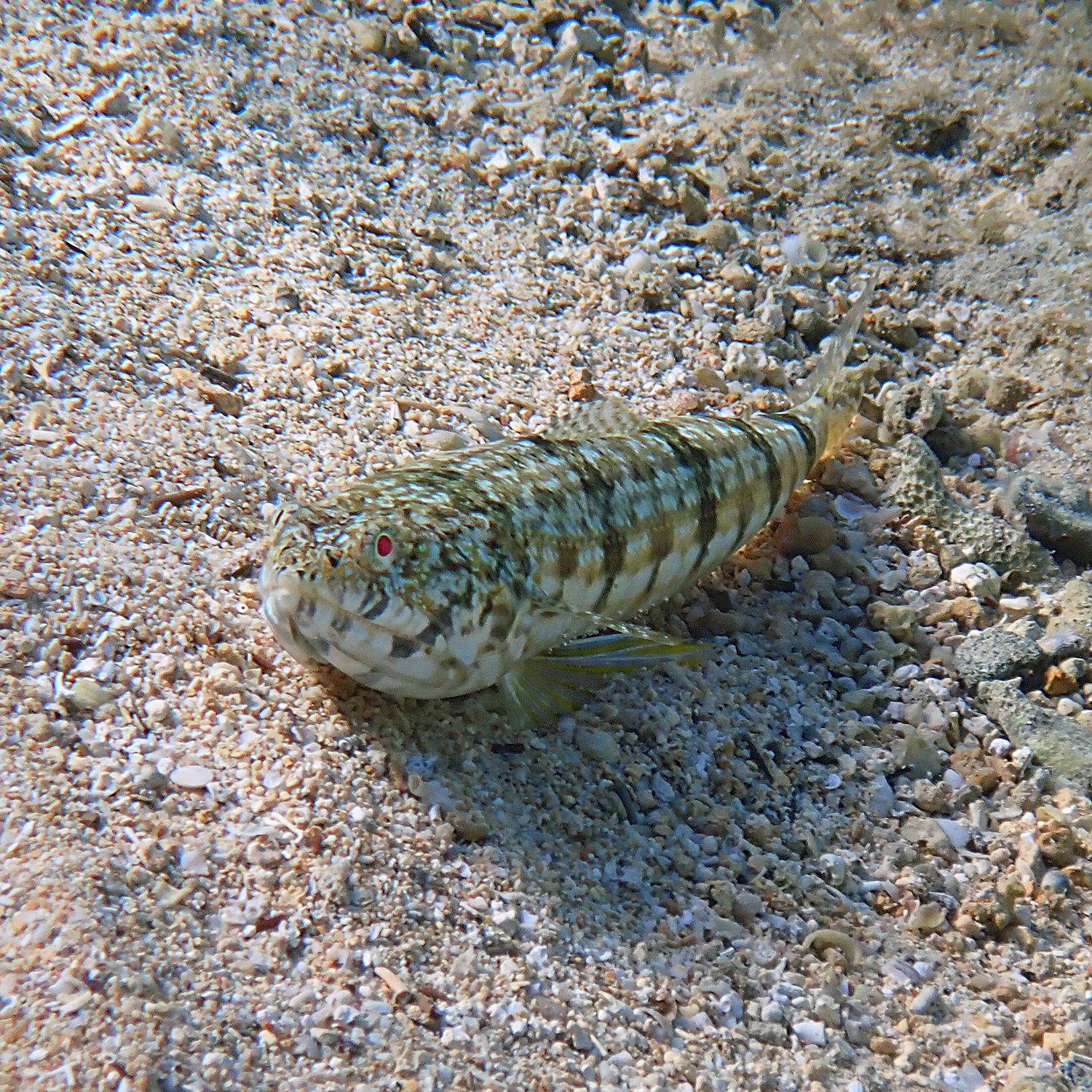
Banded lizardfish, Synodus dermatogenys

Many of these lizardfish look similar, but I believe these are the banded ones. These fish will lie very still above the sand waiting to pounce on passing fish, but will quickly burrow under the sand when disturbed. I’ve seen one swallow a fish almost as big as it is!
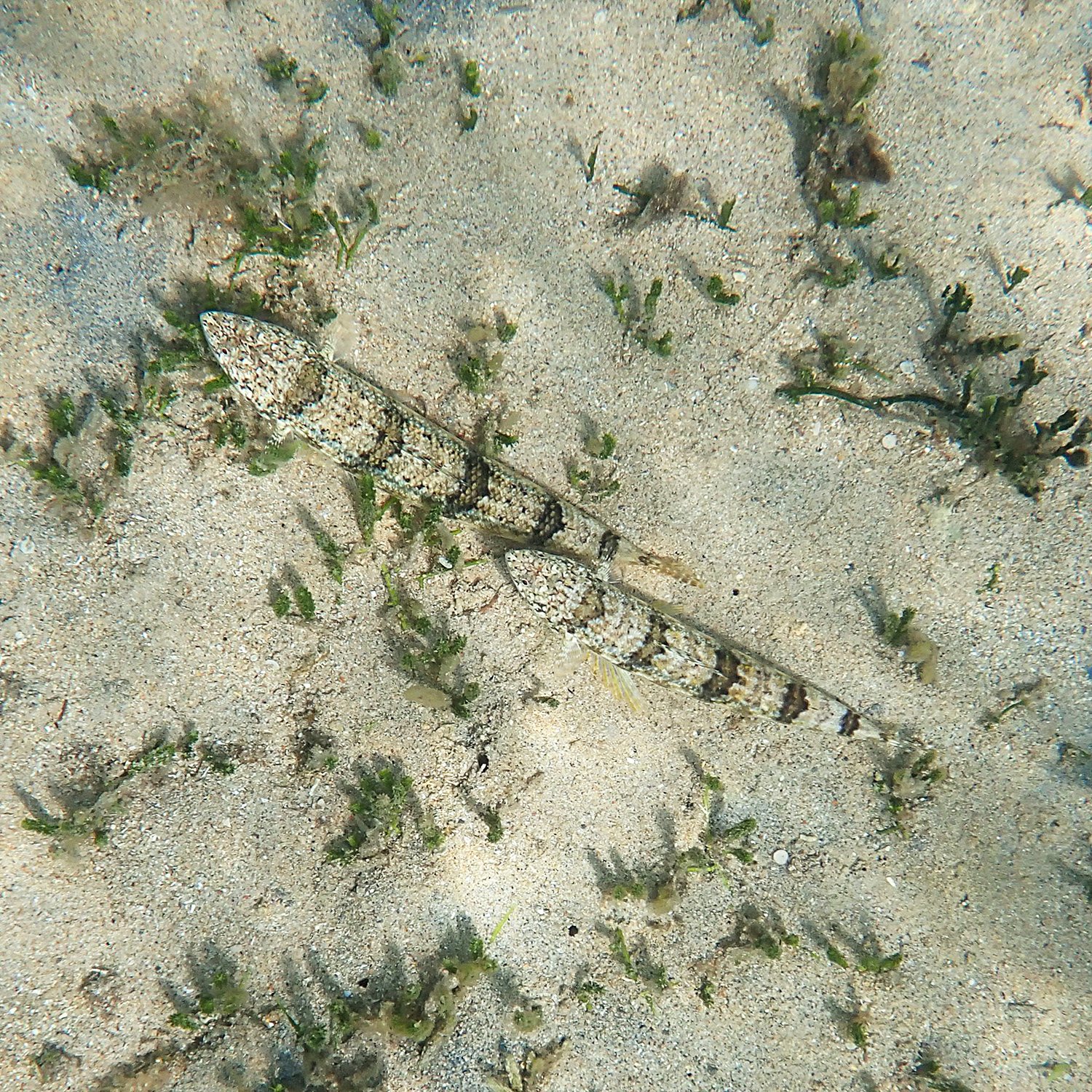
View fullsize 30 Apr 2022 (128)_crop.jpg
View fullsize 12 Dec 2021 (157)_crop.jpg

Goram dragonet, Diplogrammus goramensis

Look carefully at the sand beneath your feet, because these tiny little guys often are there hiding in plain sight, just waiting for small invertebrates to pass by to snack on.
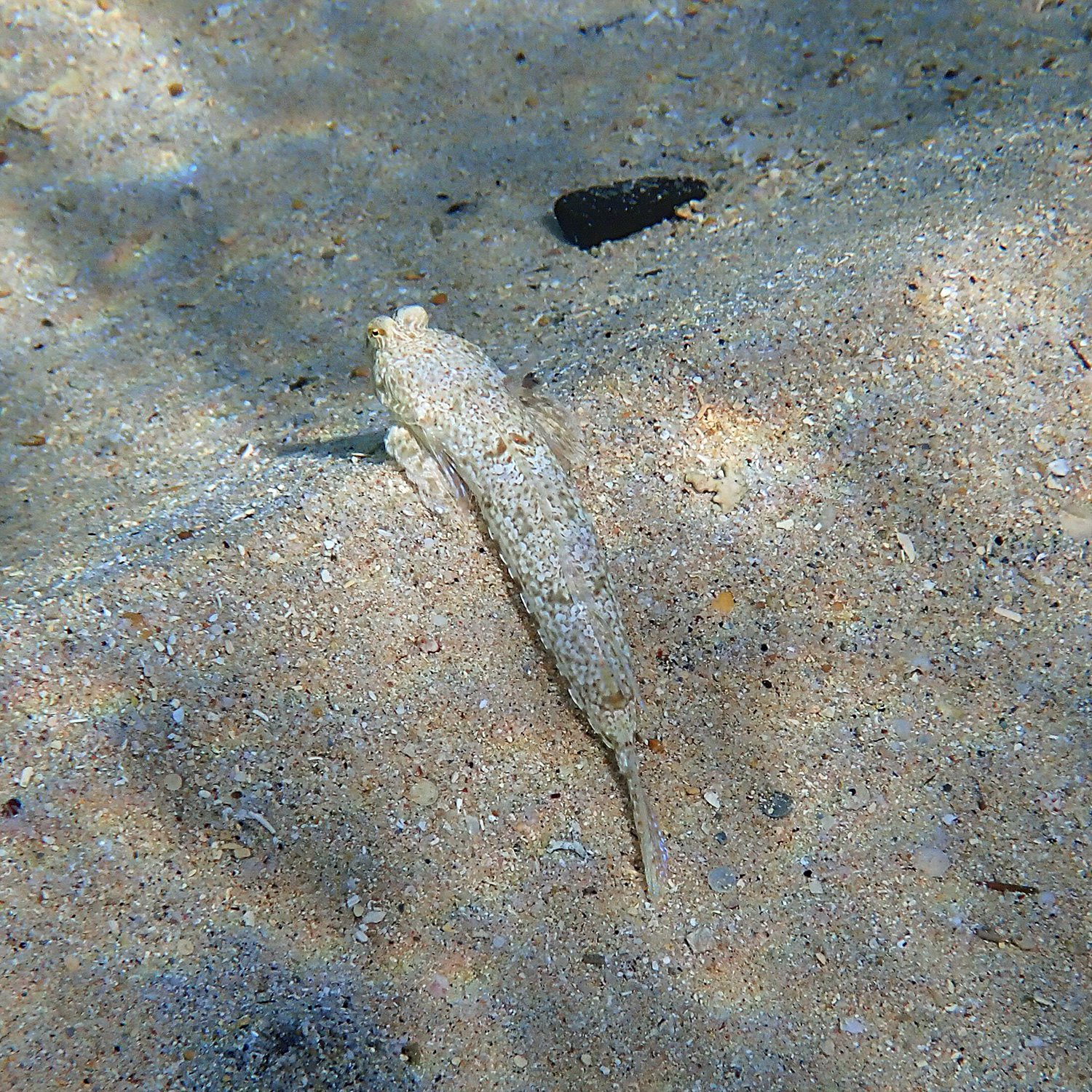
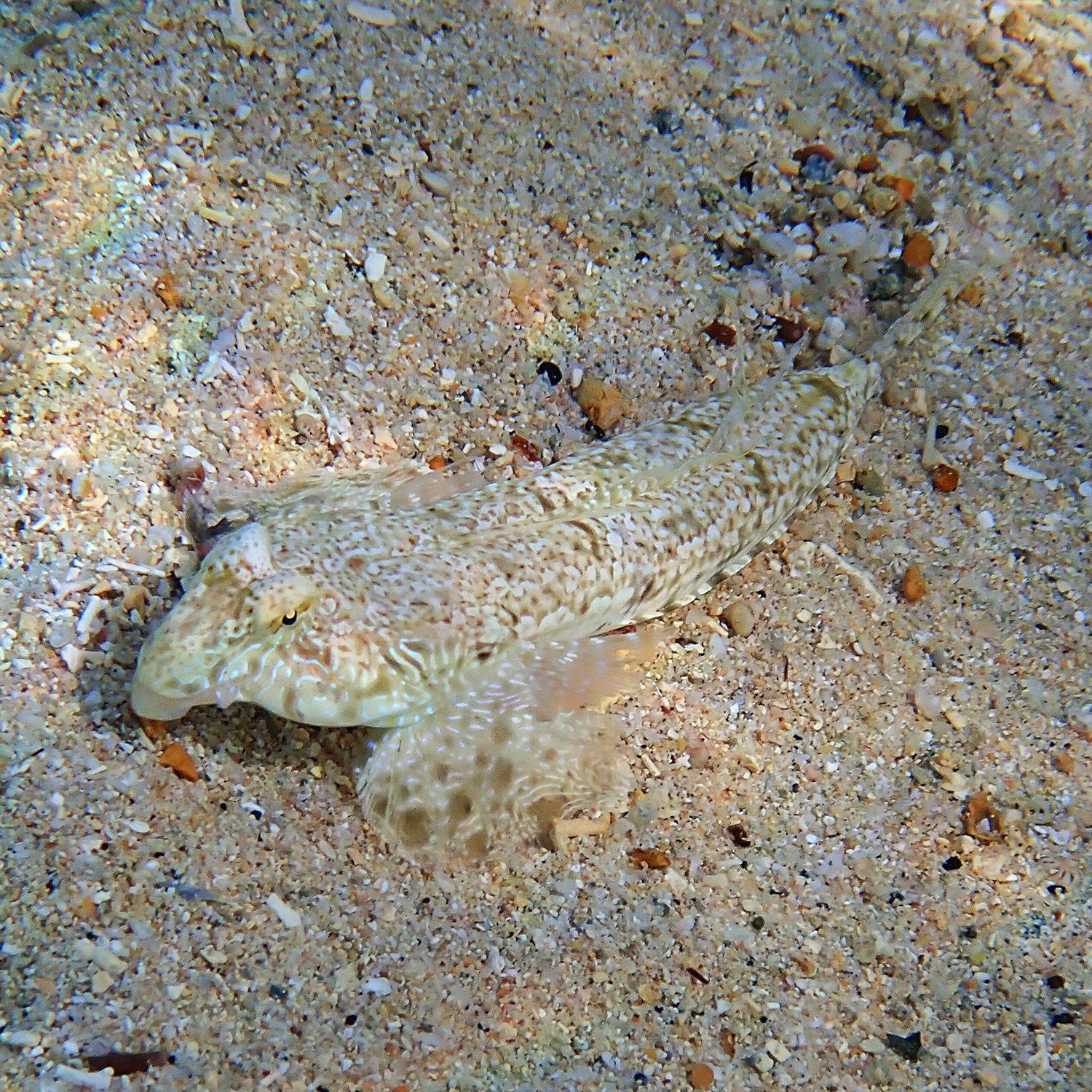
View fullsize 27 Nov 2021 (125)_crop.jpg
View fullsize 27 Nov 2021 (131)_crop.jpg

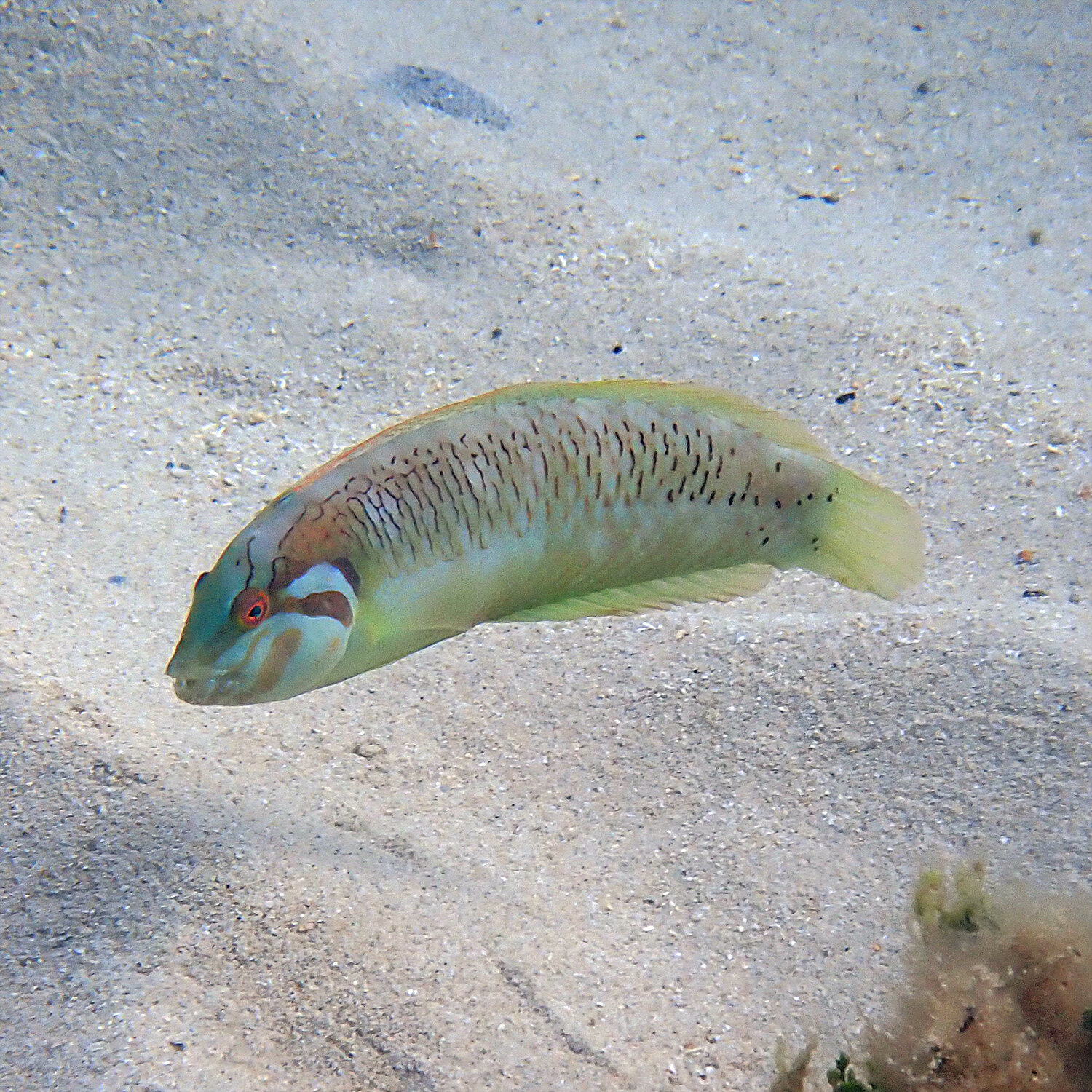
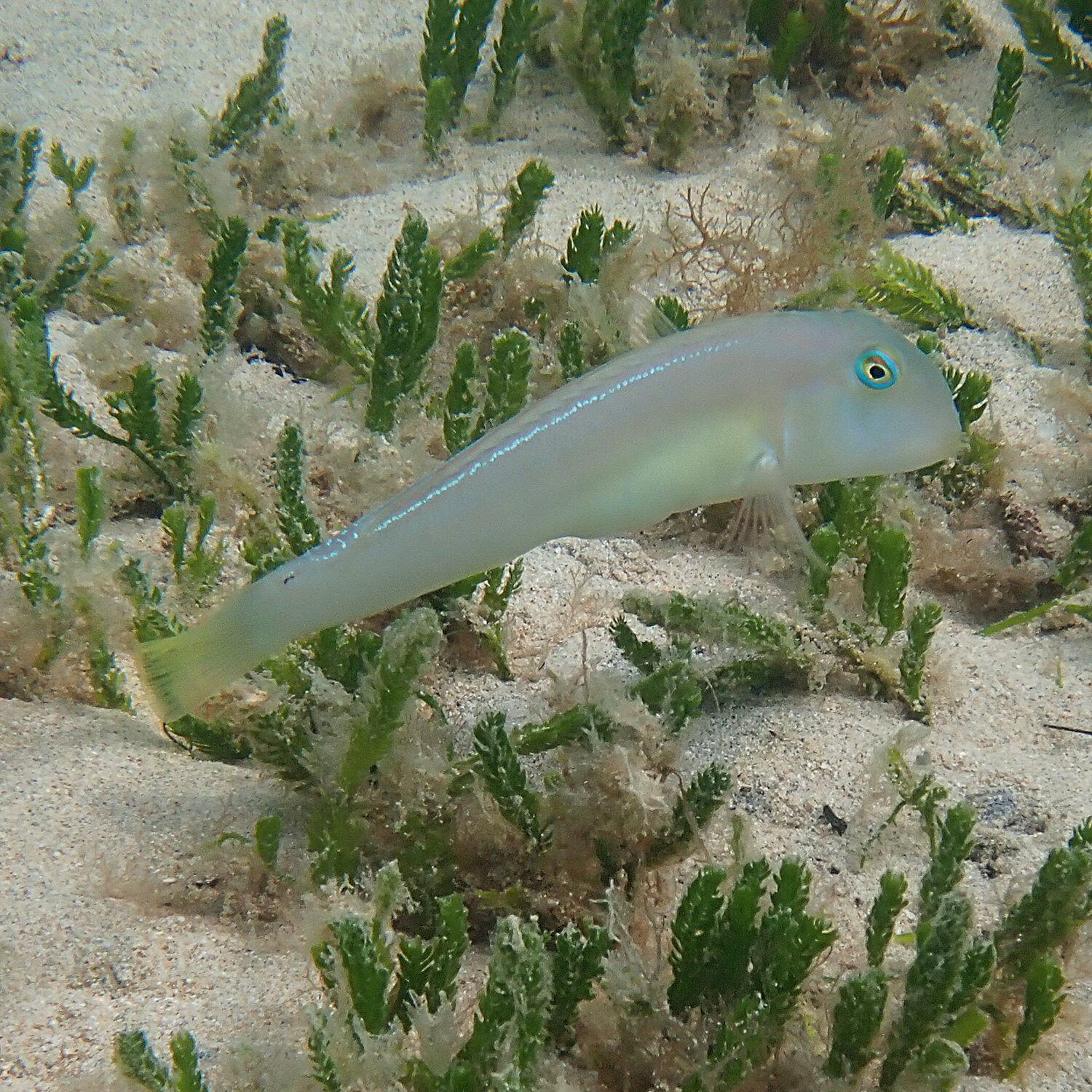
Knife wrasse, Cymolutes praetextatus

Solitary, with a pearly opalescence and blue eyes, these small fish are quiet, unassuming types, never aggressive, just getting on with life in their own sweet time. I love them!
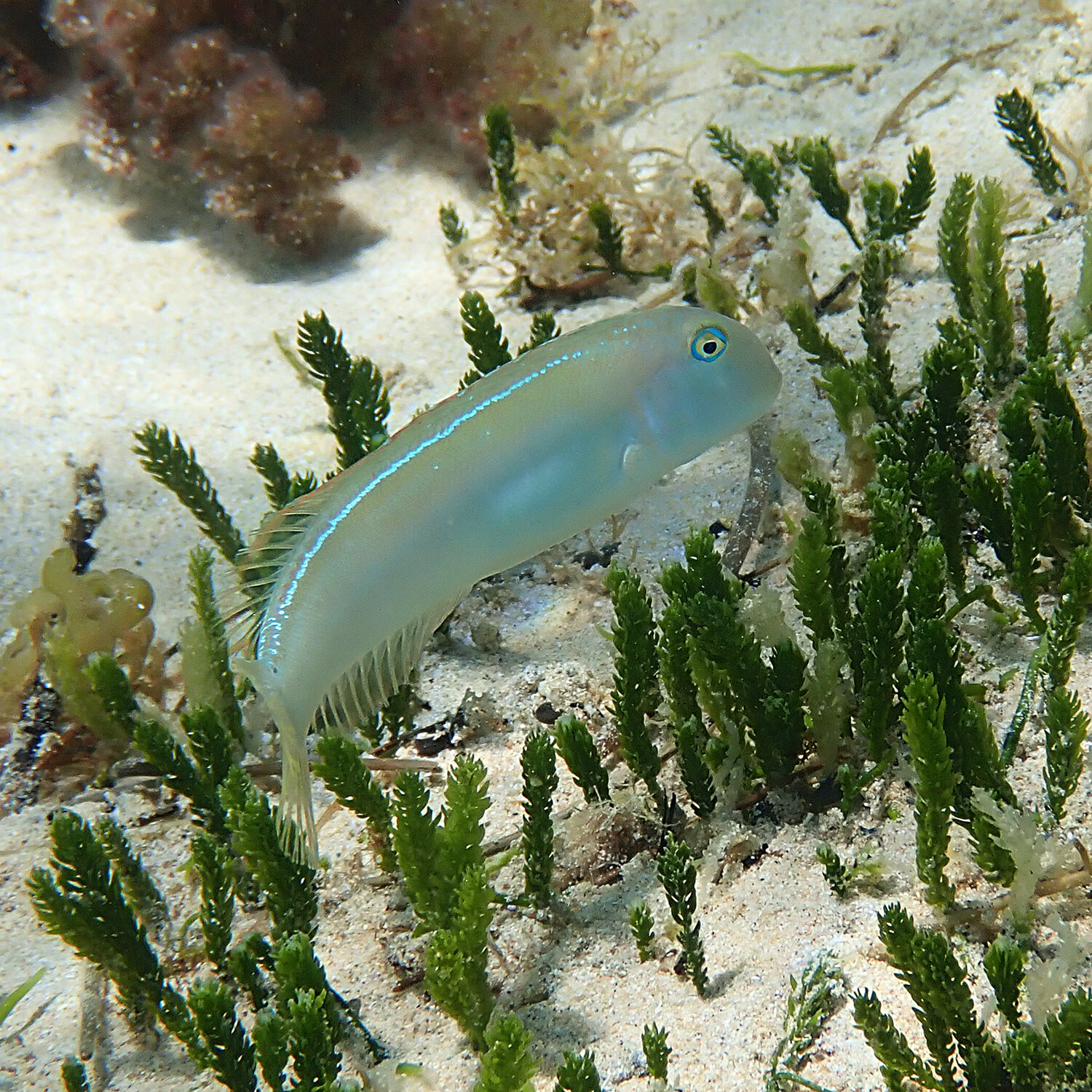
View fullsize 3 Sep 2021 (173)_crop.jpg
View fullsize 26 Mar 2021 (246)_crop.jpg

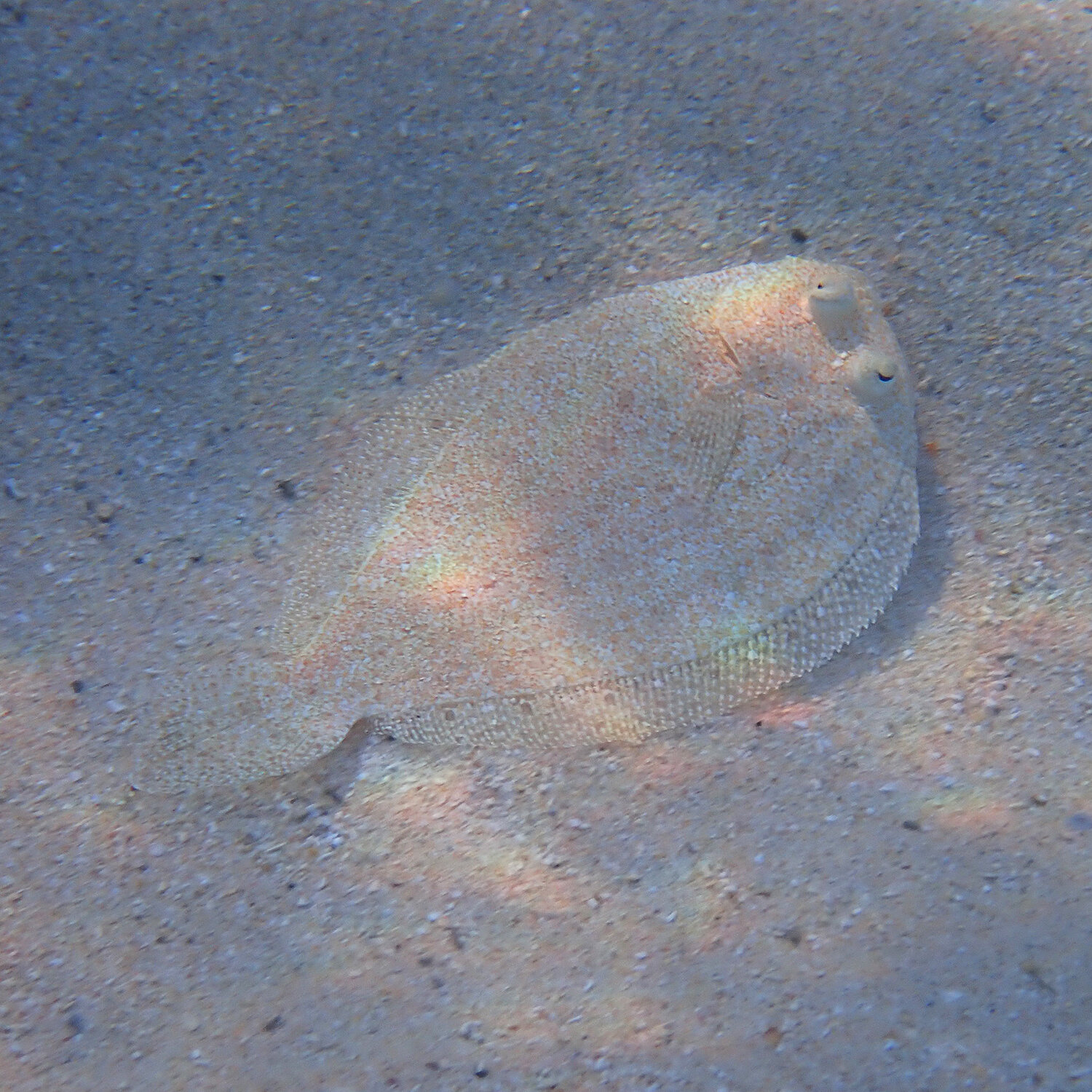
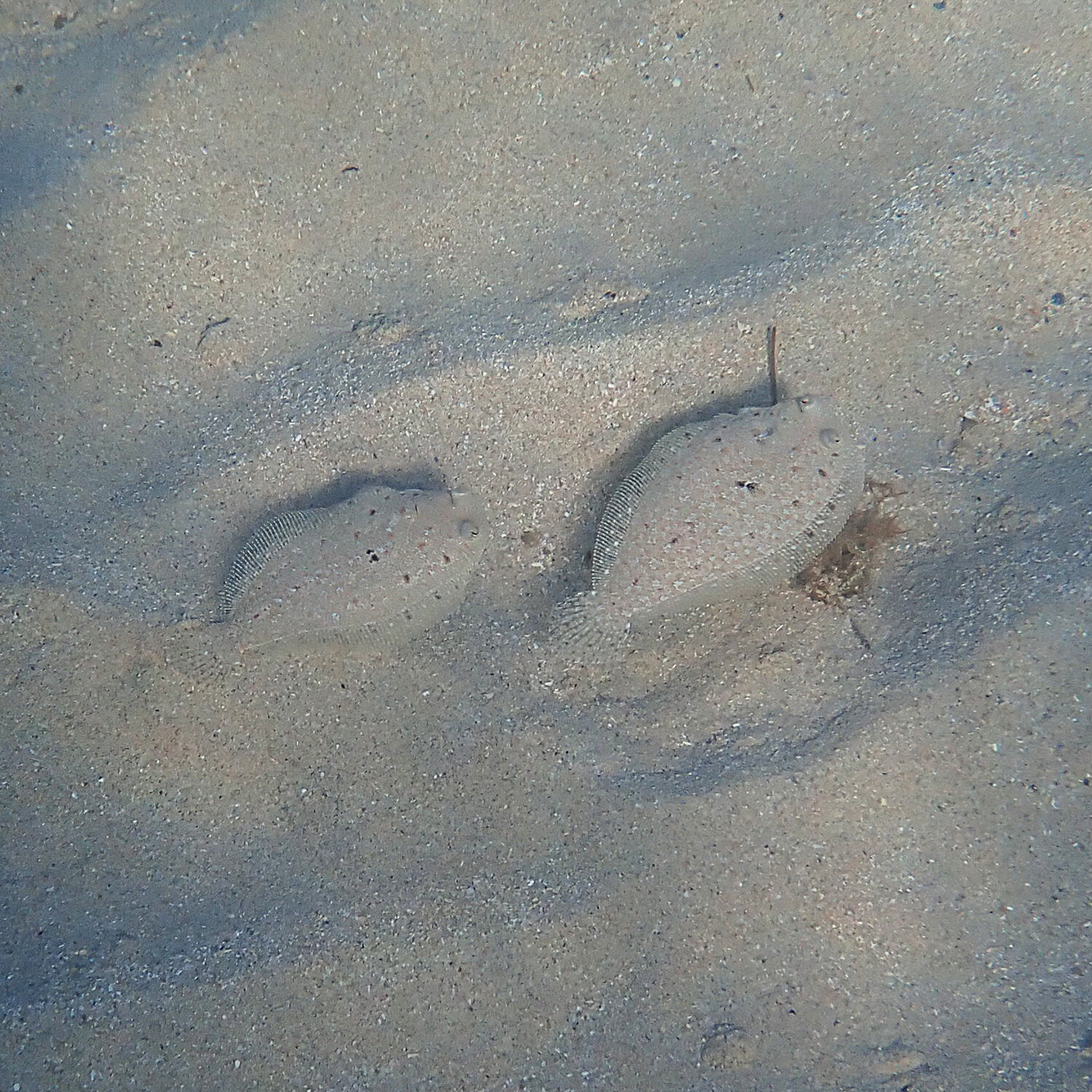
Lefteye flounder, Family Bothidae

Masters of disguise, these flatfish are a rare sight during daylight hours. They look quite different to the other flatfish we get, the leopard flounder (see below).
View fullsize 17 Apr 2021 (195)_crop.jpg
View fullsize 13 Aug 2021 (159)_crop.jpg

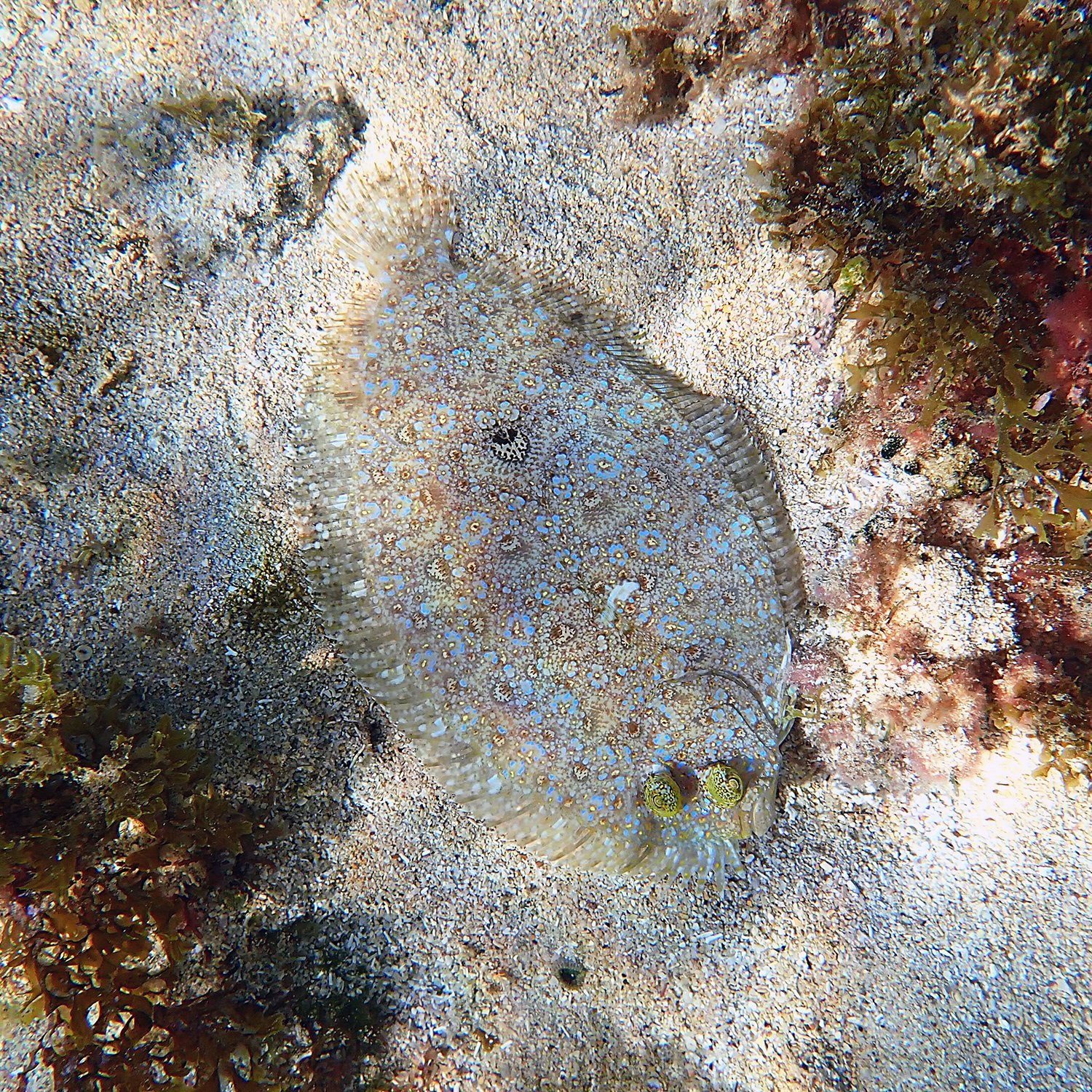
Leopard flounder, Bothus pantherinus

Someone once described these fish as looking like they were a pair of grandma’s old curtains, and I can see exactly why. Like their cousins, above, they are more active at night, but you will ocasionally see them during the day as well.

View fullsize 21.11 (217)_crop.jpg
View fullsize 20 Mar 2022 (142)_crop.jpg

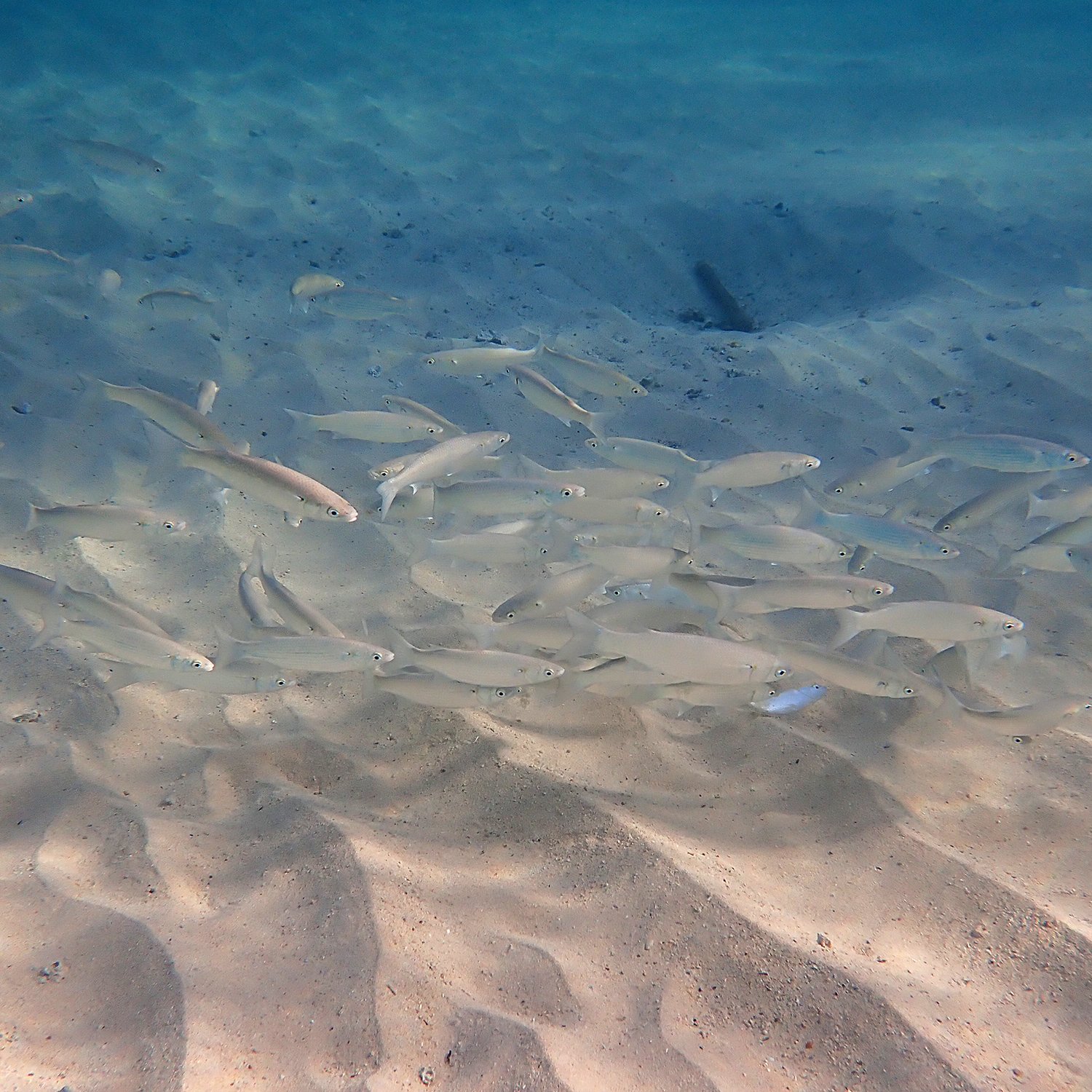
Sand mullet, Myxus elongatus

Again, right in the shallow waters, in the intertidal zone, another common visitor are the schools of sand mullet that snuffle through the sand looking for morsels to eat. This snuffling behaviour means they are vulnerable to getting plastic rings (from juice bottles, for example) flipping up and over and getting stuck around their heads. It is a reminder that is so important to snip those rings. Better still, I wish packaging companies would do away with this design altogether.
View fullsize 4 Jan 2021 (73)_crop.jpg
View fullsize 20 Jan 2022 (208)_crop.jpg

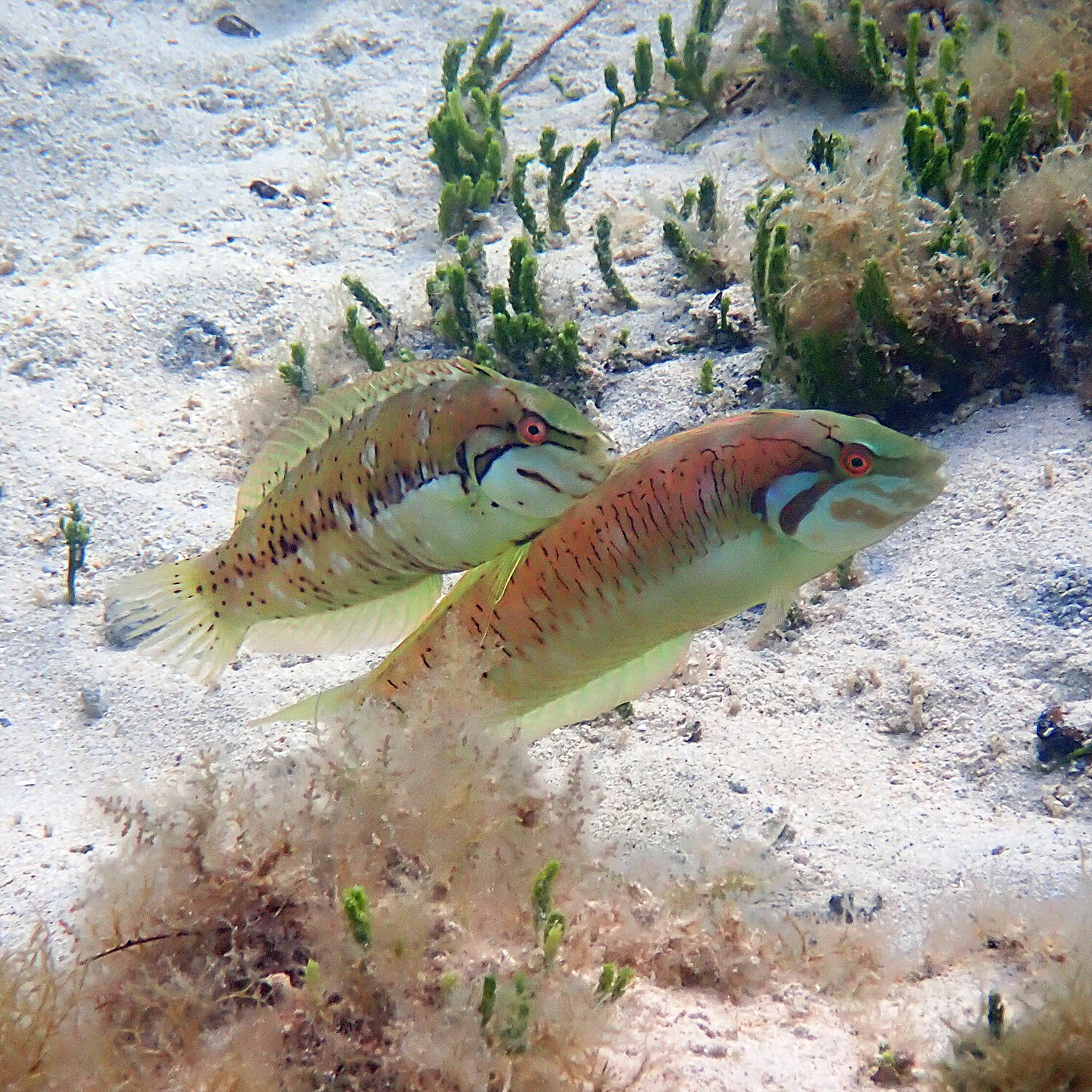
Seagrass wrasse, Novaculoides macrolepidotus

These guys come and go, but when they are present they like to hide in small patches of weed.
View fullsize 5 Jan 2021 (185)_crop.jpg
View fullsize 5 Jan 2021 (172)_crop.jpg

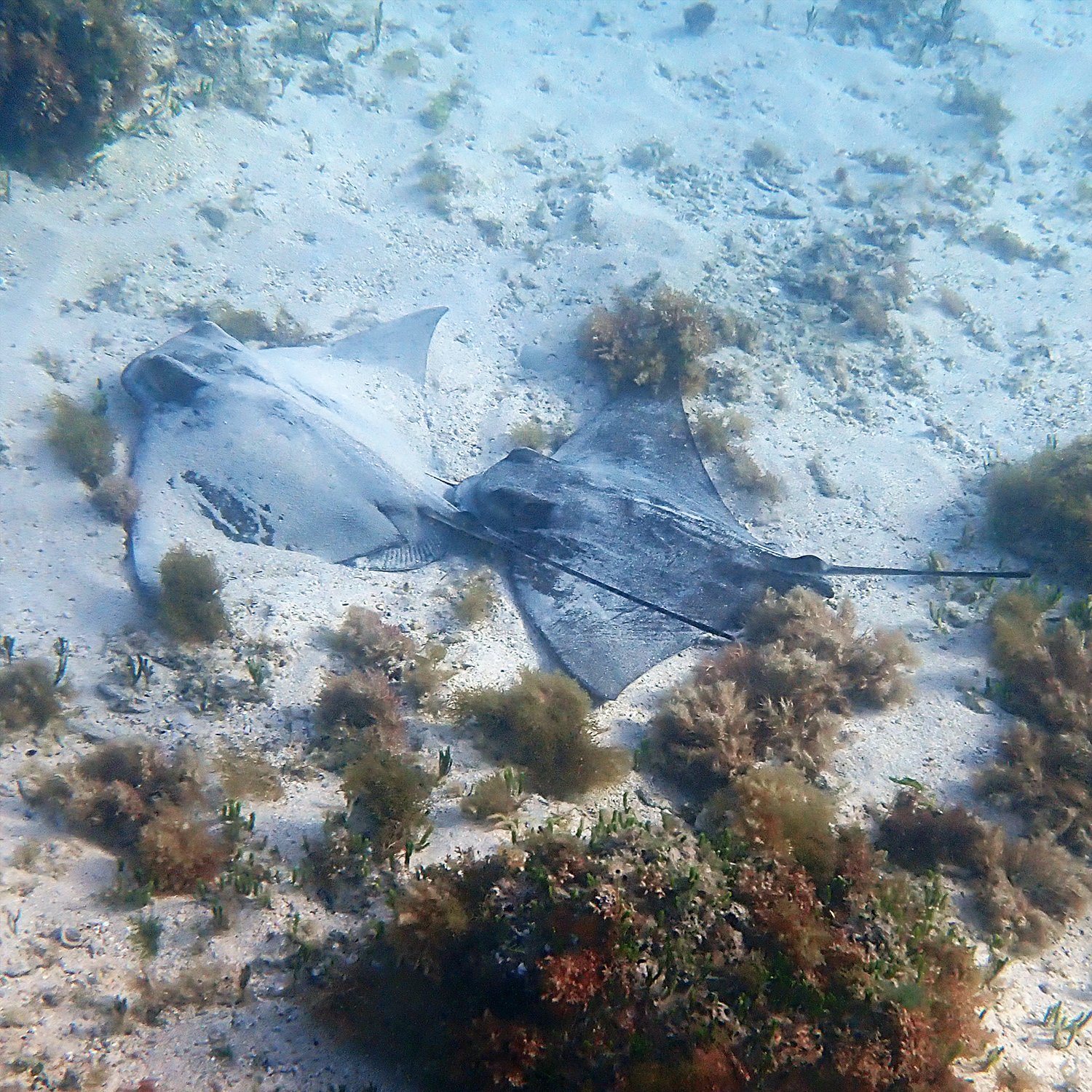
Southern eagle ray, Myliobatis tenuicaudatus

Southern eagle rays can sometimes be seen in the bay; their graceful swimming motion is a sight to behold. I was lucky enough to see a pair mating one morning.

View fullsize 20 July 2021 (5)_crop.jpg
View fullsize 16.12 (3)_crop.jpg

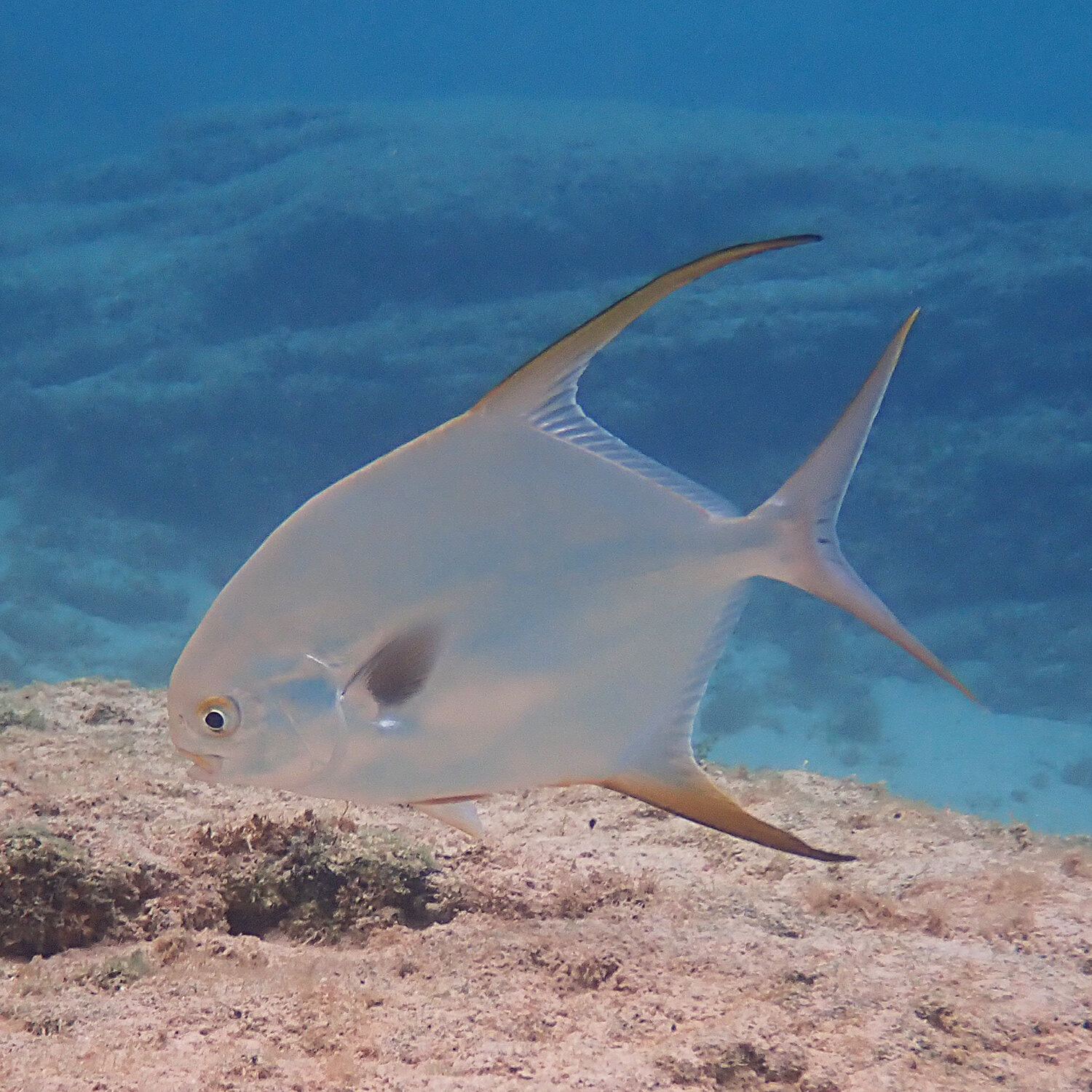
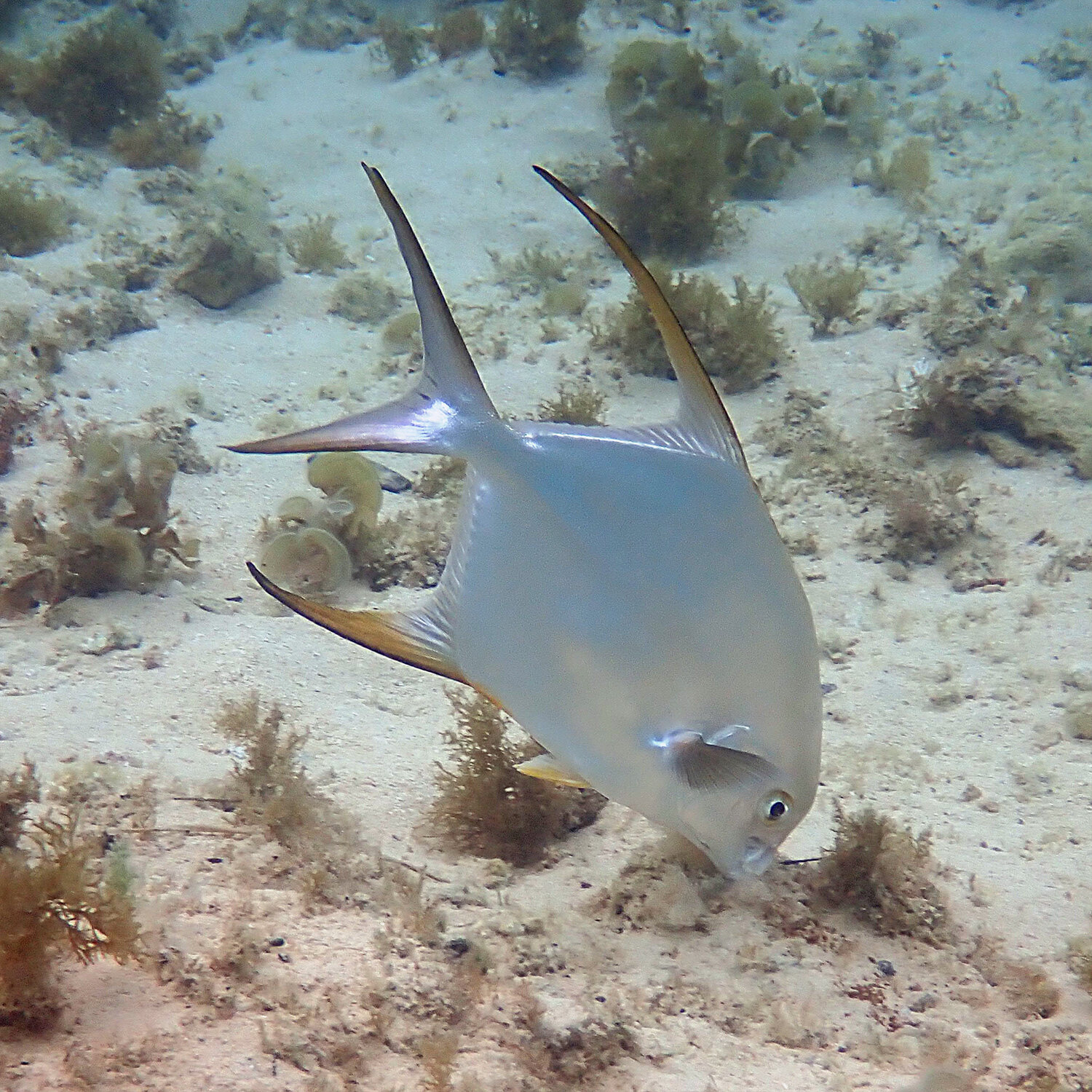
Snubnosed dart, Trachinotus blochii

These are infrequent, but very welcome visitors. There is usally a pair of them, but in July and August 2021 we had a very large male join them inside the lagoons. And just this last week I saw a lone juvenile hanging out in the shallows of Emily Bay. I talk about these visitors in another post in my March focus, A pair and a spare – snubnose darts on Norfolk Island’s reef.
View fullsize 1 Feb 2021 (116)_crop.jpg
View fullsize 1 Feb 2021 (120)_crop.jpg

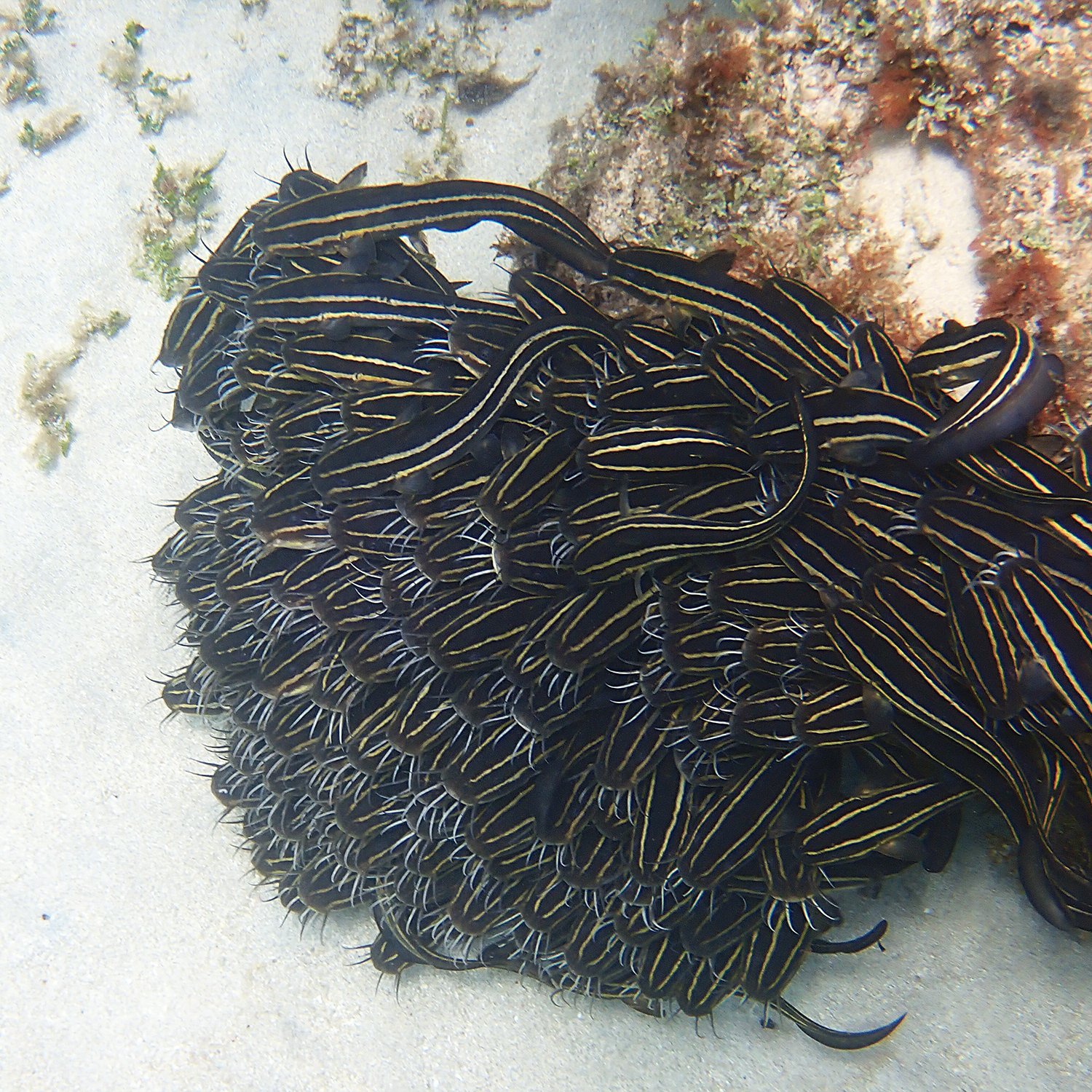
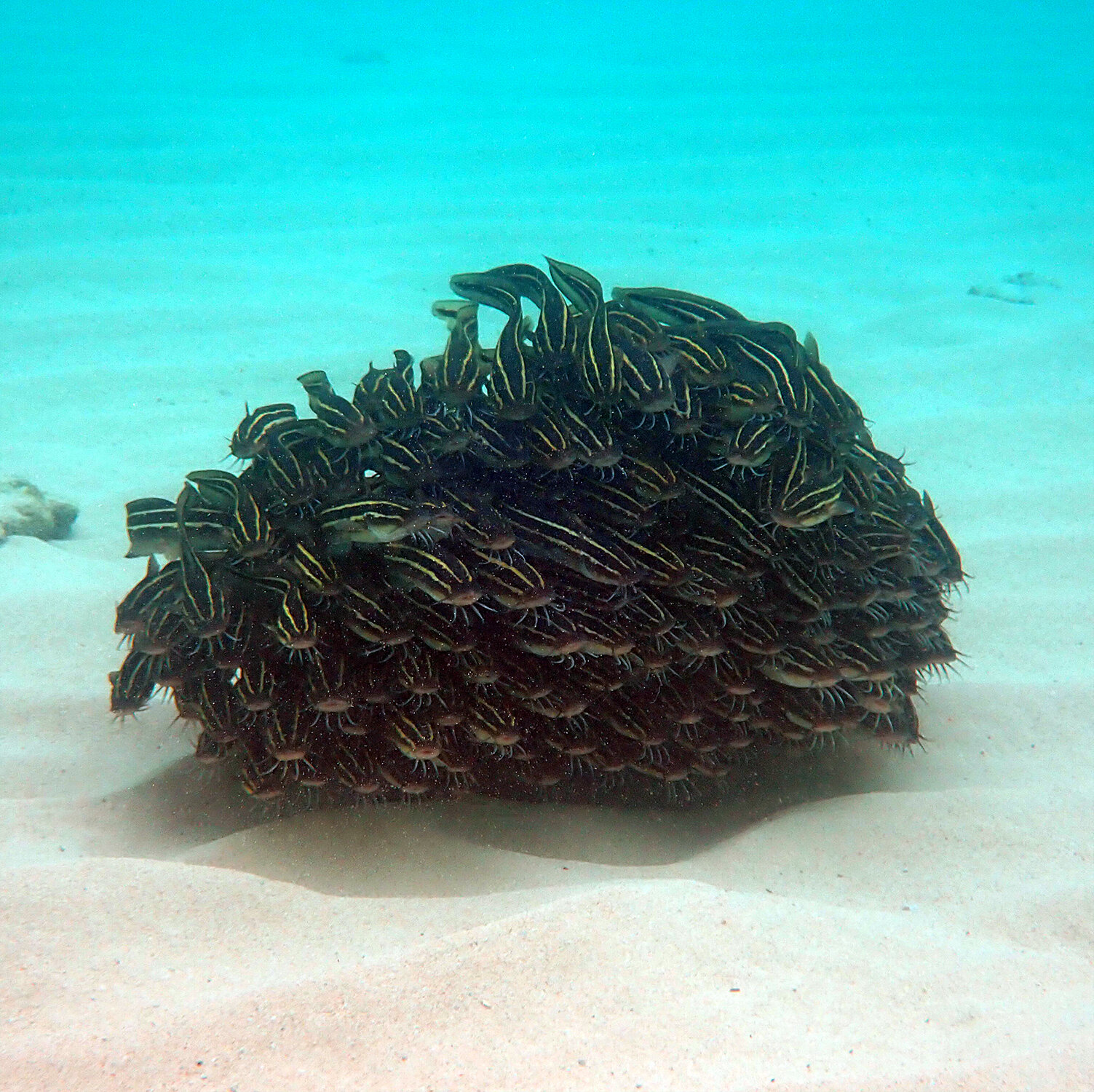
Striped catfish, Plotosus lineatus

The mesmerising movement of the catfish balls as they move around the shallows are a sight to behold. They come and go infrequently, but sometimes you get lucky and see them. These balls are usually made up of young catfish. The ball will break up as they move into pairs to mate and then they disappear from our bays until the next time.
View fullsize 27 Feb 2022 (131)_crop.jpg
View fullsize OI001569_crop.jpg

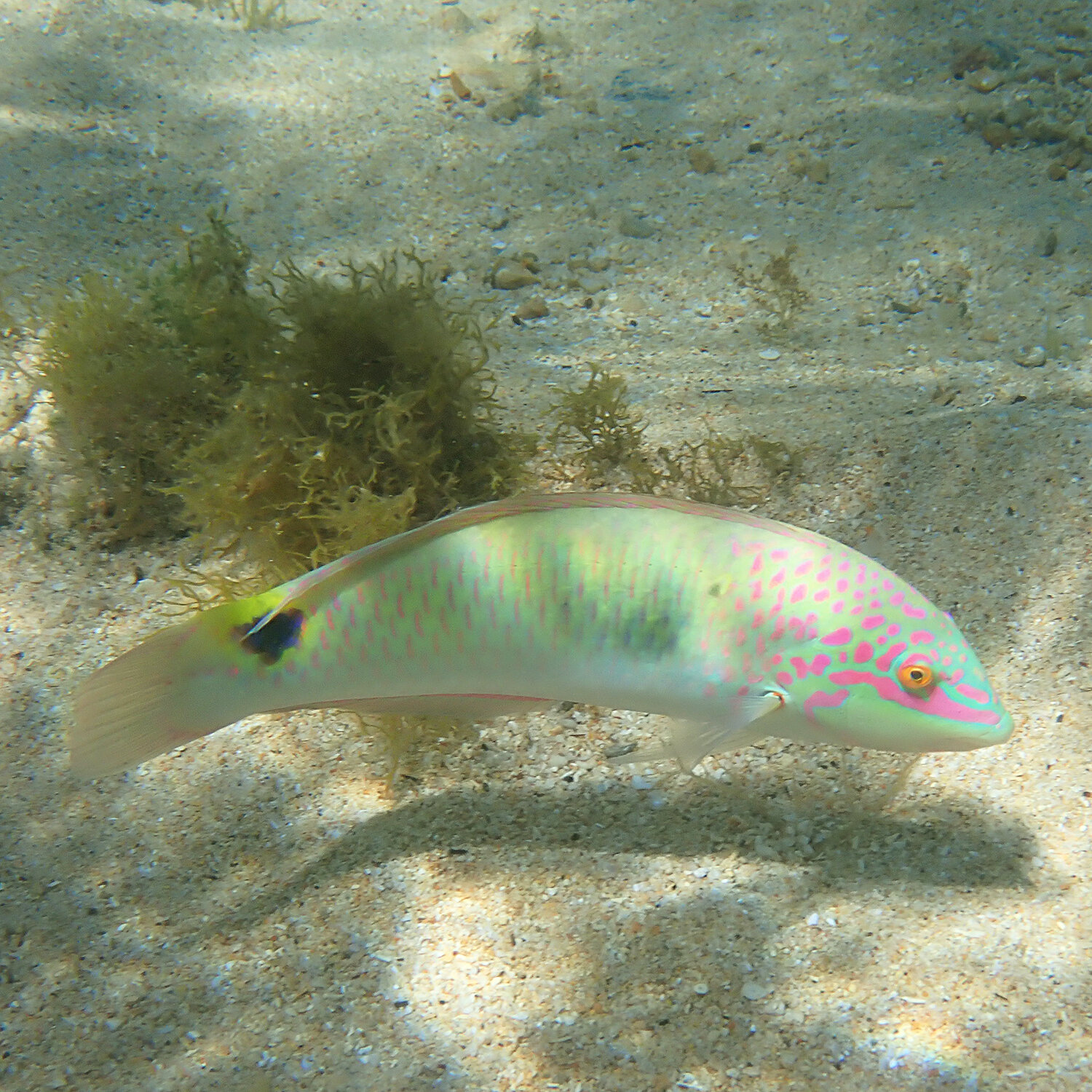
Threespot wrasse, Halichoeres trimaculatus

This is a member of the wrasse family that is more often found in the sandy bottom areas of the lagoon. In particular it loves to flit around in the shallows of Emily Bay, particularly at the Lone Pine end of the beach and the shallows of Slaughter Bay near the steps. The juvenile (on the right) looks very different to the adult.
View fullsize 12 Jan 2021 (245)_crop.jpg
View fullsize 18 Jan 2023 (65)_crop.jpg

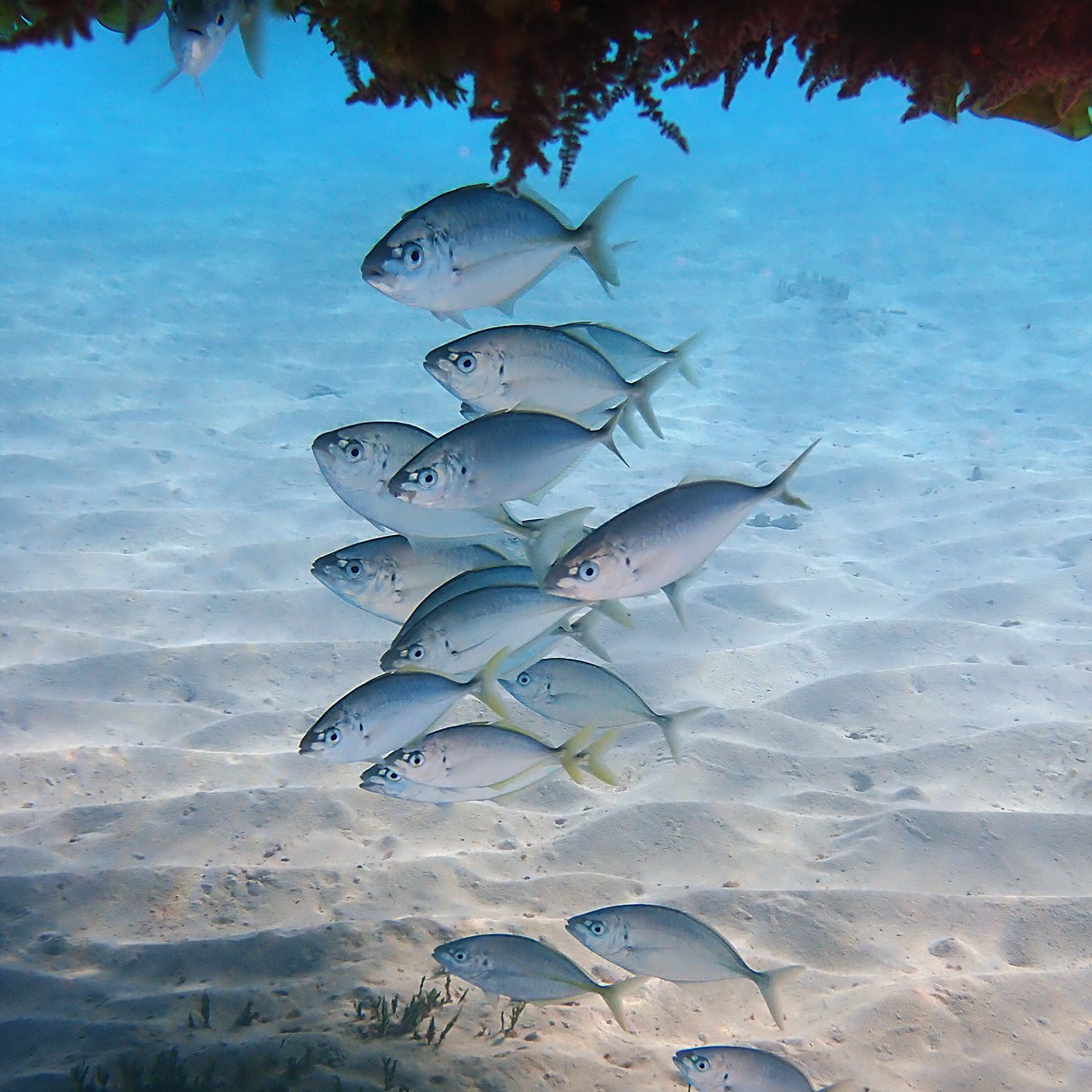
Trevally, Pseudocaranx sp “dentex”

We get juvenile trevally in the lagoon, often in schools that sweep though, voraciously taking out anything small enough in their way. Their swimming agility and speed is quite something.
View fullsize 25 Nov 2021 (31)_crop.jpg
View fullsize 9 Jan 2022 (89)_crop.jpg

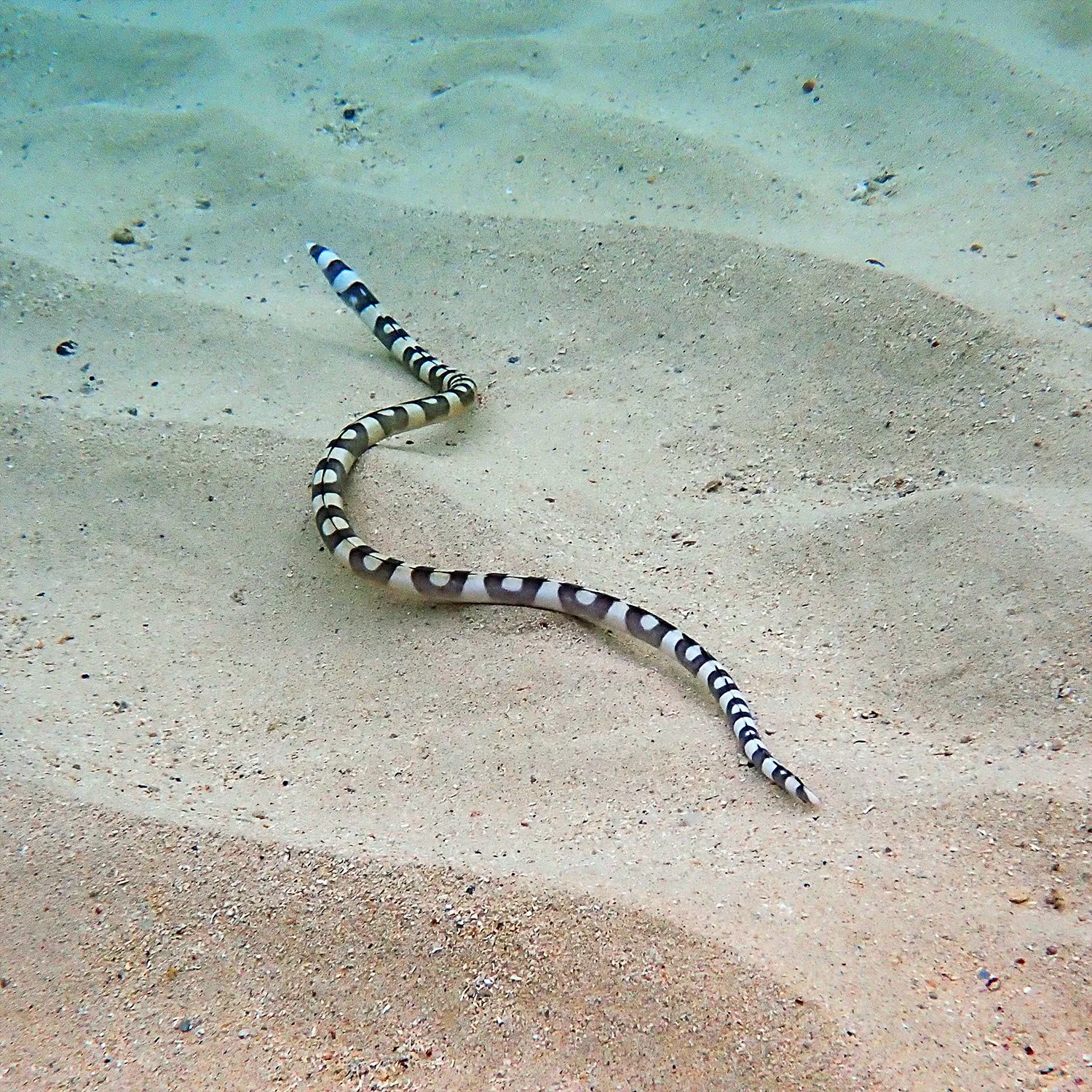
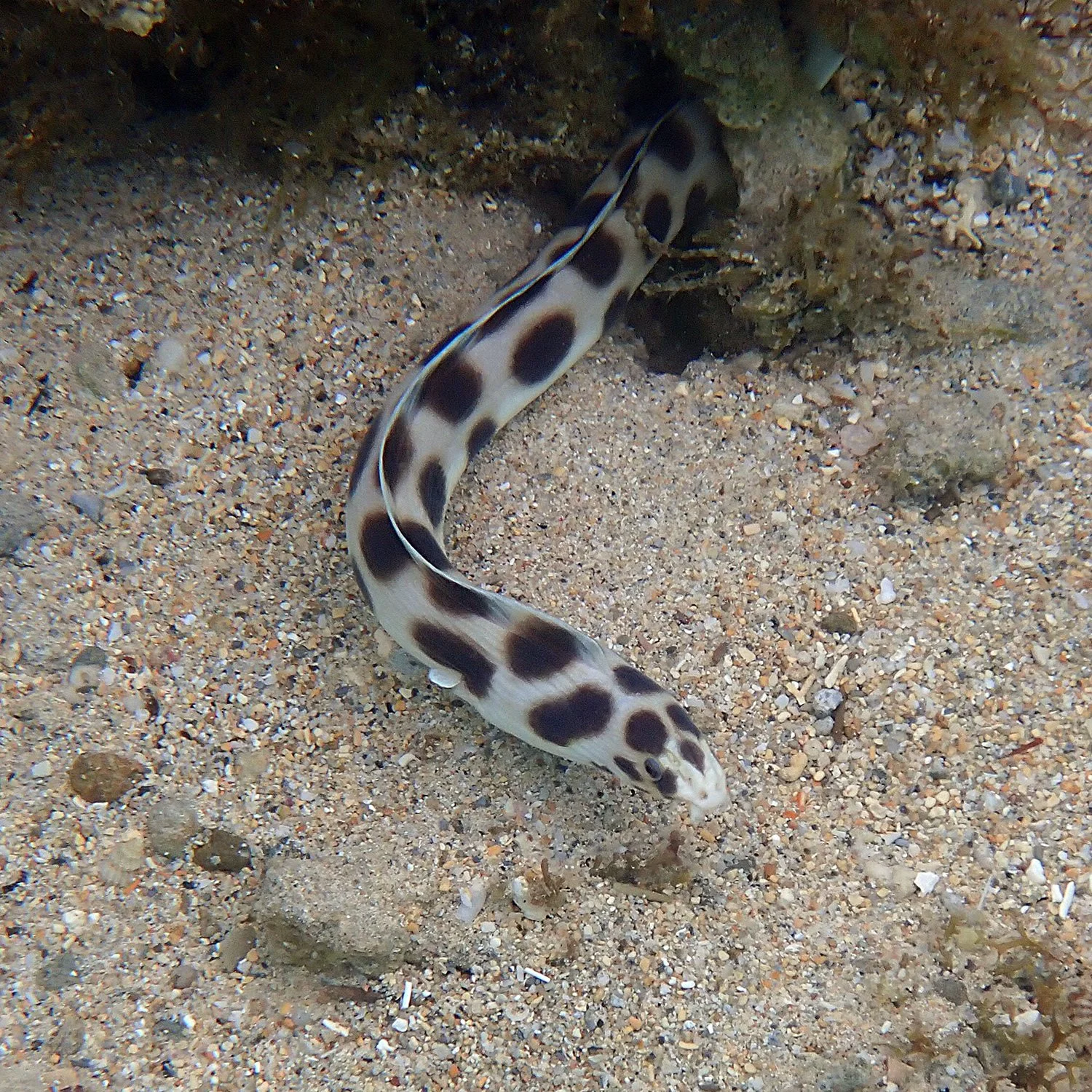
Snake eels

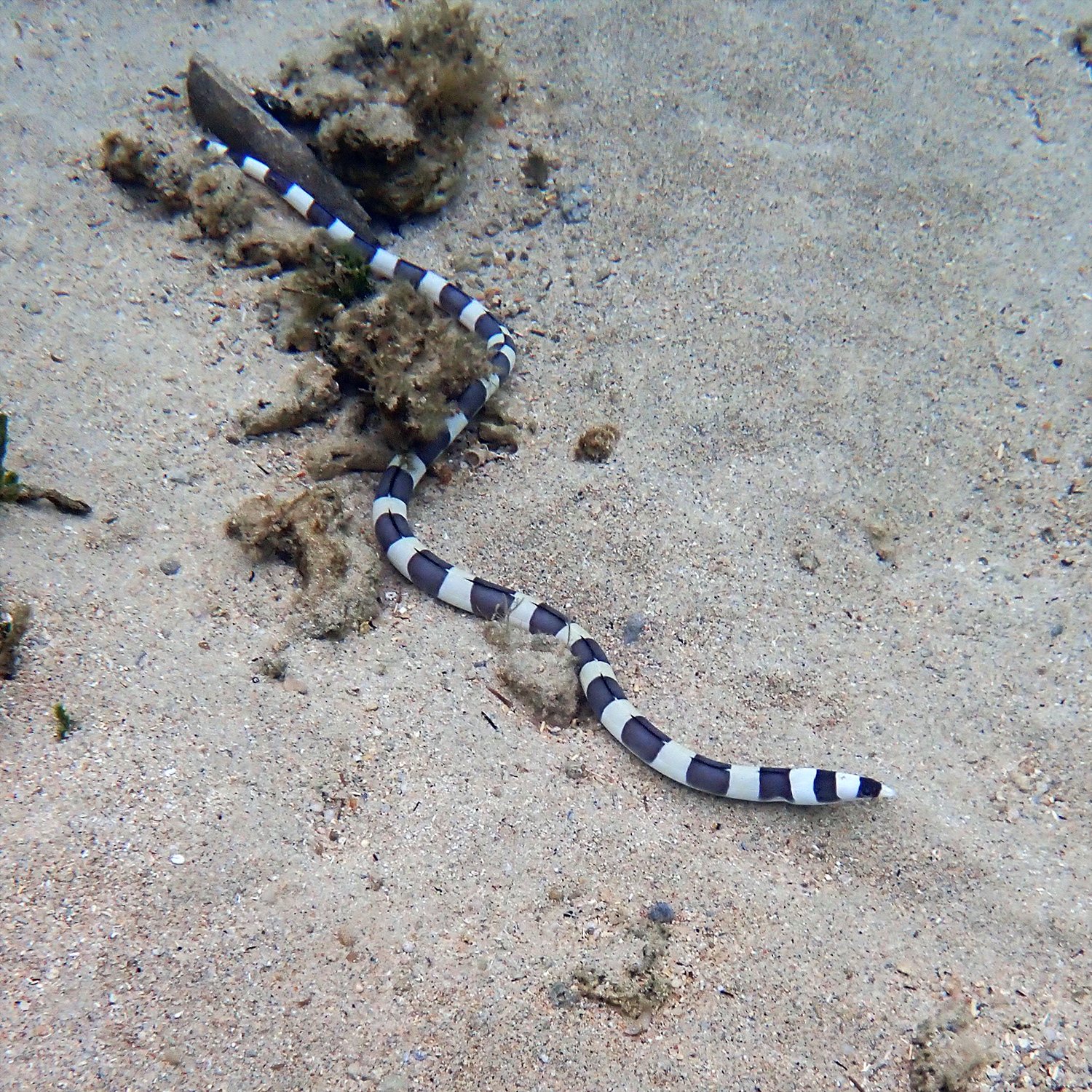
This list would be incomplete without the docile and elegant snake eels. Visitors will often be alarmed when they see what they think is a sea snake, but it isn’t one at all. It is an eel.

We have three species, but the two you are likely to see in Emily Bay are the banded snake eel, Leiuranus semicinctus (top two images) and the convict snake eel, Leiuranus versicolor (middle two images). The latter often gets mistaken for the banded snake eel, but as you can see it has a cookie cutter pattern as part of its stripes.

The third species is the pretty ocellate snake eel, Myrichthys maculosus (bottom images). These are the least common of the three.

I discuss these three snake eels in an earlier post on this blog, Banded, convict and spotted snake eels – know the difference.

View fullsize Banded snake eel, Leiuranus semicinctus
Banded snake eel, Leiuranus semicinctus
View fullsize 28 Dec 2022 (200)_crop.jpg
View fullsize Convict snake eel, Leiuranus versicolor
Convict snake eel, Leiuranus versicolor
View fullsize 17 Feb 2021 (13)_crop.jpg
View fullsize Ocellate snake eel, Myrichthys maculosus
Ocellate snake eel, Myrichthys maculosus
View fullsize Ocellate snake eel, Myrichthys maculosus
Ocellate snake eel, Myrichthys maculosus
In Ecosystem Tags Emily Bay, Snorkelling, Fish, fish species, ecosystem
← Bubble and fizz – a quick guide to coral reef chemistryTiptoeing through the government silos →
Featured
Signs of bleaching – 8 December 2025
Dec 8, 2025
Signs of bleaching – 8 December 2025
Dec 8, 2025

I took these photographs this morning, Monday, 8 December 2025. A few warm days of settled weather, little cloud cover and low tides in the hottest part of the day have led to some early bleaching on our reef. Bleaching doesn’t always mean death for our corals, but it is concerning to have this so early in the summer season. Fingers crossed the conditions don’t last and the reef can recover.

Dec 8, 2025
Nature is my teacher
Dec 3, 2025
Nature is my teacher
Dec 3, 2025

This is a thank-you note. Five years after my first Out on a swim post – written with zero marine science quals and a head full of questions – I’m still in the water, now as a PhD candidate, because an extraordinary mix of locals, volunteers, researchers and public servants decided to share what they knew. This is the story of how nature – and a very patient community – became my teachers.

Dec 3, 2025
Reef grief: what dredging has done to other reefs
Nov 30, 2025
Reef grief: what dredging has done to other reefs
Nov 30, 2025

From Miami to Fiji, from Dubai to tiny village harbours on atolls, dredging near coral reefs has left a long trail of scars – even on ‘small’ projects. This follow-up to last week’s Kingston post walks through real examples of what happened elsewhere, and what that should make us think about before we dig up our own reef.

Nov 30, 2025
To dredge or not to dredge? The Kingston Pier channel project
Nov 20, 2025
To dredge or not to dredge? The Kingston Pier channel project
Nov 20, 2025

How much risk are we really taking with the planned dredging at Kingston Pier – and how much protection do our corals actually have on paper? This piece walks through what the federal approval does and doesn’t guarantee, explains why sediment and light matter so much to the reef, and asks the hard questions we need answered before we trade a deeper channel for a shallower future.

Nov 20, 2025
A coral reef out of balance
Nov 8, 2025
A coral reef out of balance
Nov 8, 2025

After the long dry spell, the lagoon was crystal clear and full of life. But with the return of the rains, something else has returned too – the brown, filamentous mats of Lyngbya. It’s not seaweed, it’s a cyanobacterium, and when it takes hold it smothers coral and rubble alike. The reef’s way of showing us that every drop of water, from tank to tide, is connected.

Nov 8, 2025
Aglow among the spines
Oct 25, 2025
Aglow among the spines
Oct 25, 2025

Ever seen a sea urchin that seems to glow blue from the shadows? That’s Diadema savignyi showing off its reef shimmer. Beautiful, a little spiky, and definitely not to be messed with.

Oct 25, 2025
The funky seventies sea slug – Halgerda willeyi
Oct 15, 2025
The funky seventies sea slug – Halgerda willeyi
Oct 15, 2025

If ever a sea slug was channeling the 1970s, it’s Halgerda willeyi. With its groovy orange lines and chocolate-brown bumps, it looks straight out of a vintage lounge suite – the kind with shag pile carpet and bold floral cushions. Proof that nature was nailing retro design long before humans caught on.

Oct 15, 2025
Haddon's barometer
Oct 5, 2025
Haddon's barometer
Oct 5, 2025

This Haddon’s anemone has been quietly living in the middle of Norfolk Island’s Emily Bay for years, bleaching and recovering with the seasons. Like corals, sea anemones host microscopic algae that provide most of their food. When stressed by heat or rainfall changes, they lose colour – and tell a story about seasonal changes to the weather.

Oct 5, 2025
Honoured to be featured
Sep 30, 2025
Honoured to be featured
Sep 30, 2025

I left school in the UK nearly 50 years ago, so it was a pleasant surprise to be invited to share some images and take part in an interview for an article about my work, to be published in the annual glossy magazine the school now produces. Here is the end product.

Sep 30, 2025
Celebrating Biodiversity Month on Norfolk Island
Sep 7, 2025
Celebrating Biodiversity Month on Norfolk Island
Sep 7, 2025

September is Biodiversity Month – the perfect time to celebrate the astonishing variety of life on Norfolk Island’s reef. From new fish sightings to coral mosaics, every observation is a reminder of how much there is still to learn and protect.

Read more about why biodiversity matters, globally and right here in our lagoon.

Sep 7, 2025

Latest Posts

© 2025 All rights reserved.