• Home
    • Algae
    • Corals
    • Eels
    • Everything Else
    • Kingston, Norfolk Island
    • Nudibranchs, Sea Slugs and Flatworms
    • Octopuses
    • Out On A Swim Index
    • Reef Fish
    • Sharks
    • Sea Anemones
    • Sea Stars
    • Sea Urchins and Sea Cucumbers
    • Turtles
    • Underwater
    • Videos
  • Out on a swim - blog
  • About
  • Contact + Subscribe
Menu

Norfolk Island's Reef

Discover a fragile paradise – Norfolk Island's beaches, lagoons and coral reef
  • Home
  • Explore
    • Algae
    • Corals
    • Eels
    • Everything Else
    • Kingston, Norfolk Island
    • Nudibranchs, Sea Slugs and Flatworms
    • Octopuses
    • Out On A Swim Index
    • Reef Fish
    • Sharks
    • Sea Anemones
    • Sea Stars
    • Sea Urchins and Sea Cucumbers
    • Turtles
    • Underwater
    • Videos
  • Out on a swim - blog
  • About
  • Contact + Subscribe

Out on A Swim

‘Out on a swim’ is a coral reef blog that tells the stories of the characters who live under the waves and what has caught my eye when ‘out on a swim’ in the lagoons of Norfolk Island. It is also a record of the difficulties Norfolk Island’s reef faces, like many others around the world, as a result of the poor water quality that has been allowed to flow onto it.

This page shows the most recent blog posts. For the complete catalogue, visit the ‘Out on a swim index’ page.

This blog is rated in the Top 20 Coral Reef Blogs in the world.

Notch-head marblefish

Notch-head marblefish

The smiling notch-head marblefish

June 15, 2021
22 May 2021 (65)_crop.jpg
22 May 2021 (1)_crop.jpg
09.06 (20)_crop.jpg
22 May 2021 (65)_crop.jpg 22 May 2021 (1)_crop.jpg 09.06 (20)_crop.jpg

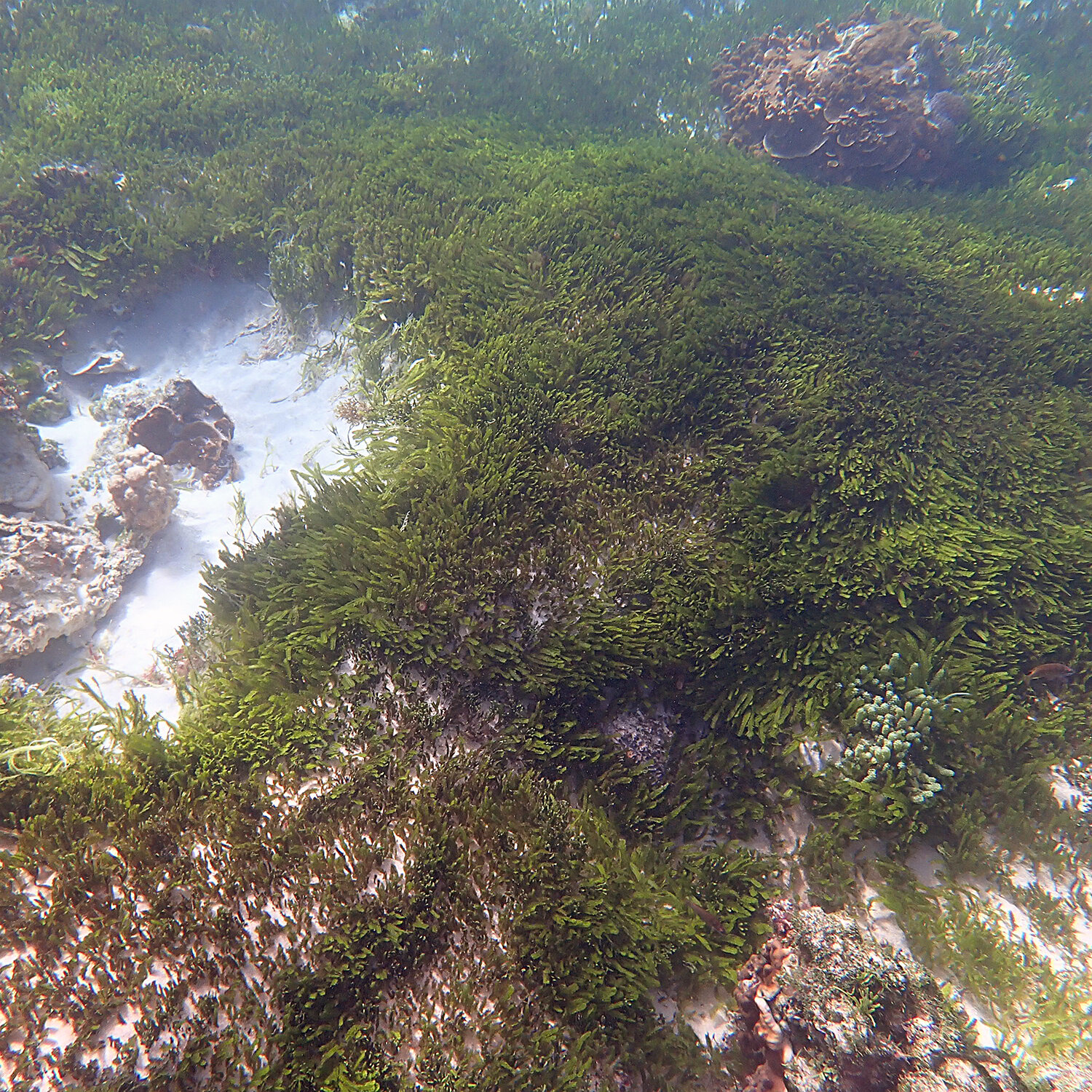
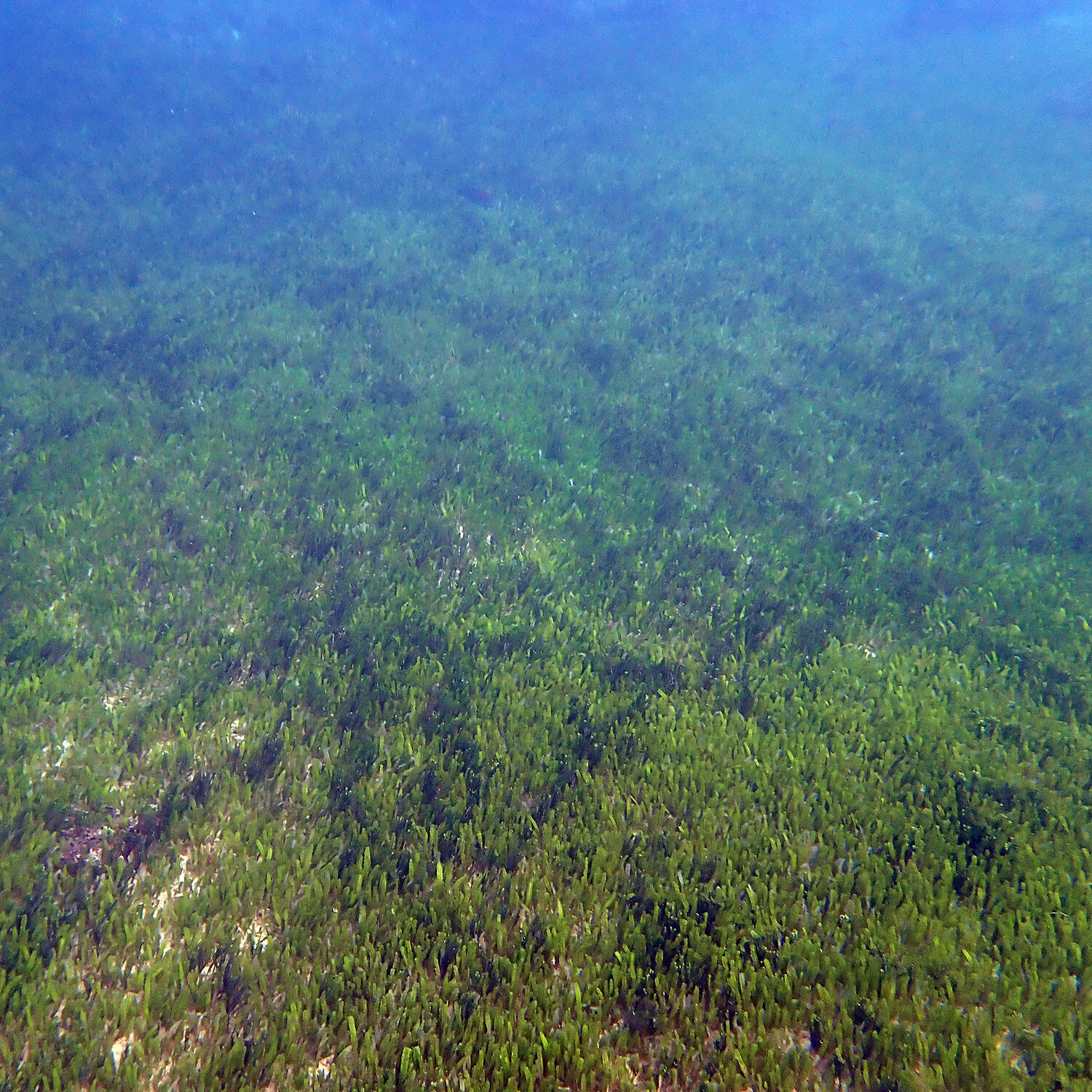
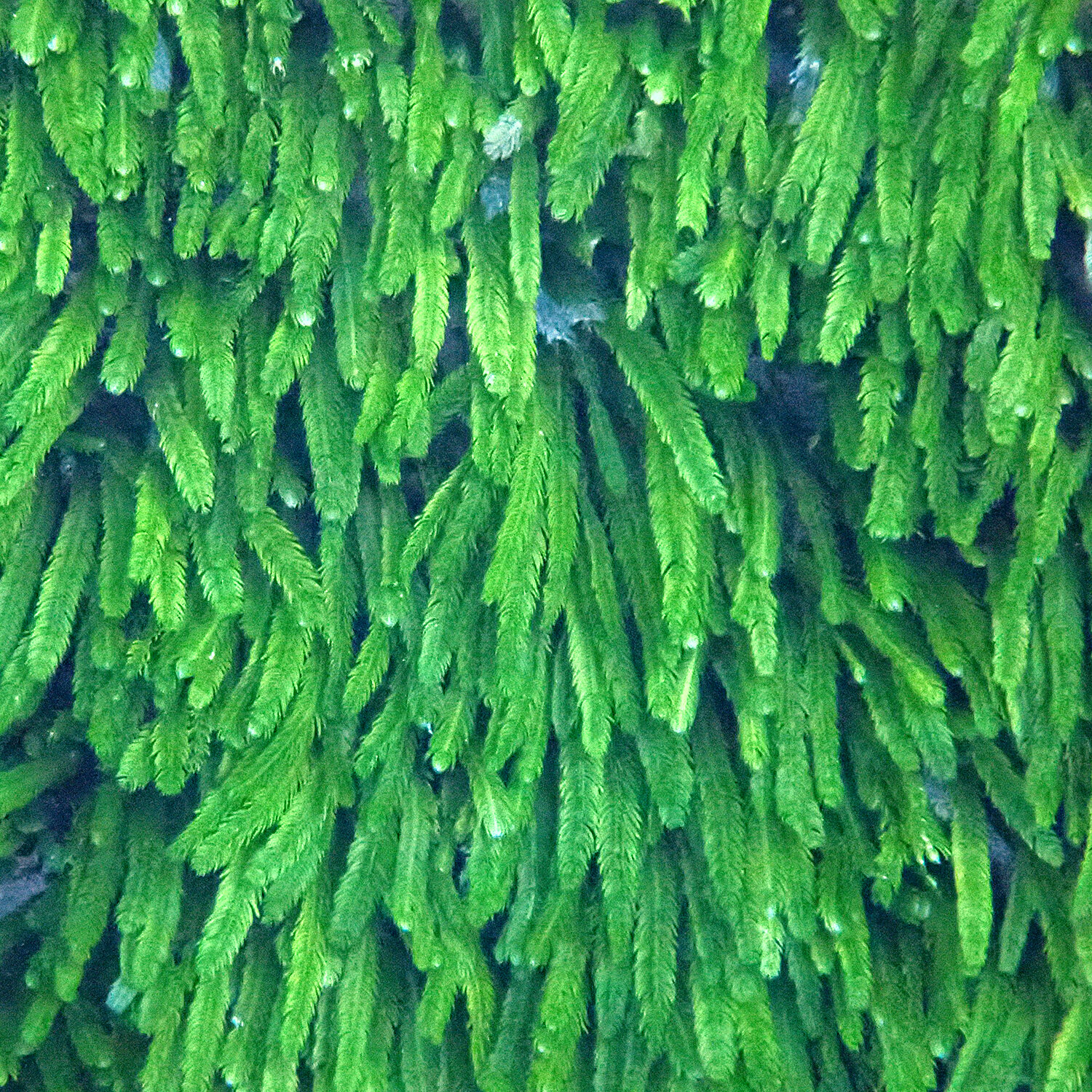
Native to the South Pacific and the tropical areas of the Indo-Pacific region, feather Caulerpa, Caulerpa taxifolia, looks like a gorgeous, lush, green meadow. And at the moment we seem to have large expanses of it in our lagoons.

In its native habitat, like Hawaii for example, it has shown no invasive tendencies. However, when out of its natural habitat range, in areas of New South Wales, or over in California for example, it is regarded as a marine pest, mainly because it is hardy and fast growing and can be detrimental to other marine life.

Victoria, South Australia, New South Wales and New Zealand all regard it as a pest species. And, unfortunately, fish don’t like to eat it.

It is popular for use in aquariums as a decorative plant, although it has been banned from sale in New South Wales. Just the tiniest piece escaping into the wild can settle and grow out of control rapidly, growing as much as 2.5 cm a day.

To be honest, I’m not sure what to make of our current carpet of feathery fronds, but I do know it is regarded as occuring naturally here. Meanwhile, I am sure fellow snorkellers will concur, we have lots of it!

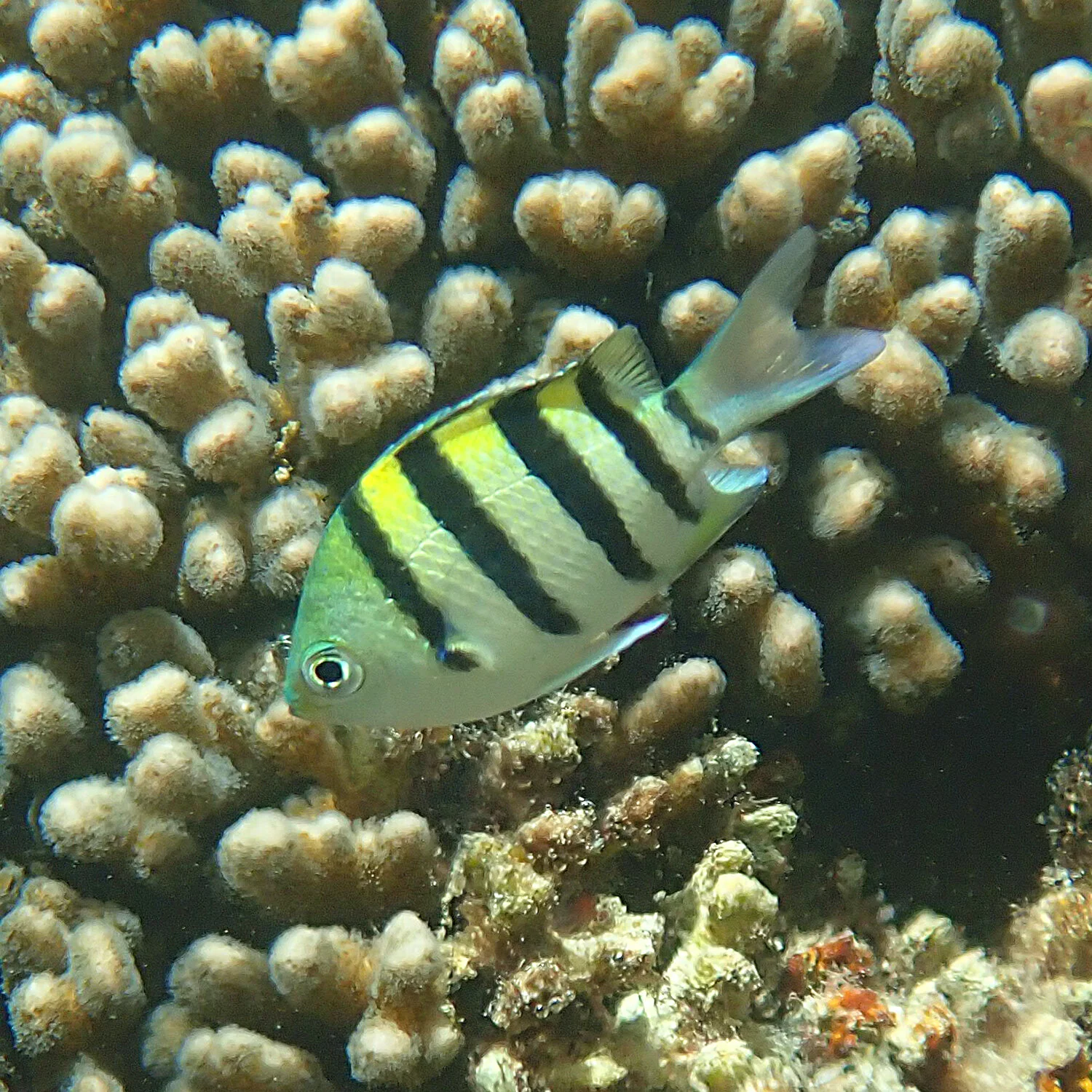
On a cheerier note, I’ve noticed many species of fish turning up their colours. Last week, I saw a mature male sergeant major. Normally black and white stripes, with its yellow epaulettes, this Indo-Pacific sergeant, also known as a sergeant major, Abudefduf vaigiensis, was a beautiful blue and green hue, still with the yellow shading and black stripes.

I spotted my little Blacktip morwong, Cheilodactylus francisi, away from the safety of his regular stomping ground on the reef, out in Emily Bay. It has been almost a month since we last crossed paths, so it was great to see him again.

And were the Norfolk cardinalfish, Ostorhinchus norfolcensis, beginning to pair off? I’m not sure, but it certainly looked like it! You can read more about their breeding habits in an earlier blog post, here: The mouth-brooding Norfolk cardinalfish.

I can’t close this week’s nature blog off without saluting the gorgeous notch-head marblefish, Aplodactylus etheridgii, that let me take his photo from right up close. To me, the most fascinating thing about this image, apart from the unusual angle, is his eyeball, so clear you can see right through it (bottom image, below). Amazing!

View fullsize A pair of Norfolk cardinalfish
A pair of Norfolk cardinalfish
View fullsize Blacktip morwong
Blacktip morwong
View fullsize Indo-Pacific sergeant, adult male
Indo-Pacific sergeant, adult male
View fullsize Indo-Pacific sergeant
Indo-Pacific sergeant
← Dead sailor’s eyeballs or glitzy glamour bubbles!Bounty Day brings some biting winds! →
Featured
Nature is my teacher
Dec 3, 2025
Nature is my teacher
Dec 3, 2025

This is a thank-you note. Five years after my first Out on a swim post – written with zero marine science quals and a head full of questions – I’m still in the water, now as a PhD candidate, because an extraordinary mix of locals, volunteers, researchers and public servants decided to share what they knew. This is the story of how nature – and a very patient community – became my teachers.

Dec 3, 2025
Reef grief: what dredging has done to other reefs
Nov 30, 2025
Reef grief: what dredging has done to other reefs
Nov 30, 2025

From Miami to Fiji, from Dubai to tiny village harbours on atolls, dredging near coral reefs has left a long trail of scars – even on ‘small’ projects. This follow-up to last week’s Kingston post walks through real examples of what happened elsewhere, and what that should make us think about before we dig up our own reef.

Nov 30, 2025
To dredge or not to dredge? The Kingston Pier channel project
Nov 20, 2025
To dredge or not to dredge? The Kingston Pier channel project
Nov 20, 2025

How much risk are we really taking with the planned dredging at Kingston Pier – and how much protection do our corals actually have on paper? This piece walks through what the federal approval does and doesn’t guarantee, explains why sediment and light matter so much to the reef, and asks the hard questions we need answered before we trade a deeper channel for a shallower future.

Nov 20, 2025
A coral reef out of balance
Nov 8, 2025
A coral reef out of balance
Nov 8, 2025

After the long dry spell, the lagoon was crystal clear and full of life. But with the return of the rains, something else has returned too – the brown, filamentous mats of Lyngbya. It’s not seaweed, it’s a cyanobacterium, and when it takes hold it smothers coral and rubble alike. The reef’s way of showing us that every drop of water, from tank to tide, is connected.

Nov 8, 2025
Aglow among the spines
Oct 25, 2025
Aglow among the spines
Oct 25, 2025

Ever seen a sea urchin that seems to glow blue from the shadows? That’s Diadema savignyi showing off its reef shimmer. Beautiful, a little spiky, and definitely not to be messed with.

Oct 25, 2025
The funky seventies sea slug – Halgerda willeyi
Oct 15, 2025
The funky seventies sea slug – Halgerda willeyi
Oct 15, 2025

If ever a sea slug was channeling the 1970s, it’s Halgerda willeyi. With its groovy orange lines and chocolate-brown bumps, it looks straight out of a vintage lounge suite – the kind with shag pile carpet and bold floral cushions. Proof that nature was nailing retro design long before humans caught on.

Oct 15, 2025
Haddon's barometer
Oct 5, 2025
Haddon's barometer
Oct 5, 2025

This Haddon’s anemone has been quietly living in the middle of Norfolk Island’s Emily Bay for years, bleaching and recovering with the seasons. Like corals, sea anemones host microscopic algae that provide most of their food. When stressed by heat or rainfall changes, they lose colour – and tell a story about seasonal changes to the weather.

Oct 5, 2025
Honoured to be featured
Sep 30, 2025
Honoured to be featured
Sep 30, 2025

I left school in the UK nearly 50 years ago, so it was a pleasant surprise to be invited to share some images and take part in an interview for an article about my work, to be published in the annual glossy magazine the school now produces. Here is the end product.

Sep 30, 2025
Celebrating Biodiversity Month on Norfolk Island
Sep 7, 2025
Celebrating Biodiversity Month on Norfolk Island
Sep 7, 2025

September is Biodiversity Month – the perfect time to celebrate the astonishing variety of life on Norfolk Island’s reef. From new fish sightings to coral mosaics, every observation is a reminder of how much there is still to learn and protect.

Read more about why biodiversity matters, globally and right here in our lagoon.

Sep 7, 2025
The fate of a coral colony when it succumbs to white syndrome – four years on
Aug 24, 2025
The fate of a coral colony when it succumbs to white syndrome – four years on
Aug 24, 2025

I’ve tracked one plating Acropora coral from 2021 to 2025. In just a few weeks, white syndrome wiped it out. Nearly four years years on, it’s still smothered in algae and sea squirts, with only the tiniest hint of new growth. It’s a stark reminder: without tackling the root cause, we’re just watching the same sad story repeat itself.

Aug 24, 2025

Latest Posts

© 2025 All rights reserved.